Search test library by skills or roles
⌘ K

Orchestration Engineer Test

The Orchestration Engineer Test assesses a candidate's expertise in backend development, system design, and DevOps practices. It evaluates proficiency in microservices, containerization, and orchestration technologies such as Docker and Kubernetes through scenario-based MCQs, alongside coding questions to test practical skills in programming and cloud infrastructure management.

Covered skills:

  • Backend Development
  • System Design
  • DevOps Practices
  • Microservices Architecture
  • Containerization with Docker
  • Kubernetes Orchestration
  • CI CD Pipelines
  • Cloud Infrastructure Management
  • Scalability and Load Balancing
  • APIs and Web Services
  • Monitoring and Logging
  • Version Control Systems
Get started for free
Preview questions

About the Orchestration Engineer Assessment Test


The Orchestration Engineer Test helps recruiters and hiring managers identify qualified candidates from a pool of resumes, and helps in taking objective hiring decisions. It reduces the administrative overhead of interviewing too many candidates and saves time by filtering out unqualified candidates at the first step of the hiring process.

The test screens for the following skills that hiring managers look for in candidates:

  • Proficient in designing scalable backend systems that ensure high availability and performance.
  • Capable of creating efficient system architectures accommodating growing demands.
  • Competent in employing DevOps practices to streamline development and operations.
  • Experienced in developing and managing microservices for modular application architecture.
  • Adept in using Docker for containerization to ensure consistency across environments.
  • Skillful in orchestrating applications using Kubernetes for optimized deployment and scalability.
  • Knowledgeable in setting up CI/CD pipelines to automate the software release process.
  • Proficient in managing cloud infrastructure to ensure reliability and efficiency.
  • Able to implement scalability strategies and load balancing to enhance application performance.
  • Experienced in integrating and managing APIs and web services for communication between systems.
  • Capable of implementing monitoring and logging tools for effective system diagnostics.
  • Proficient in using version control systems like Git for managing code efficiently.

1200+ customers in 80 countries


Use Adaface tests trusted by recruitment teams globally. Adaface skill assessments measure on-the-job skills of candidates, providing employers with an accurate tool for screening potential hires.

customers in 75 countries
Get started for free
Preview questions

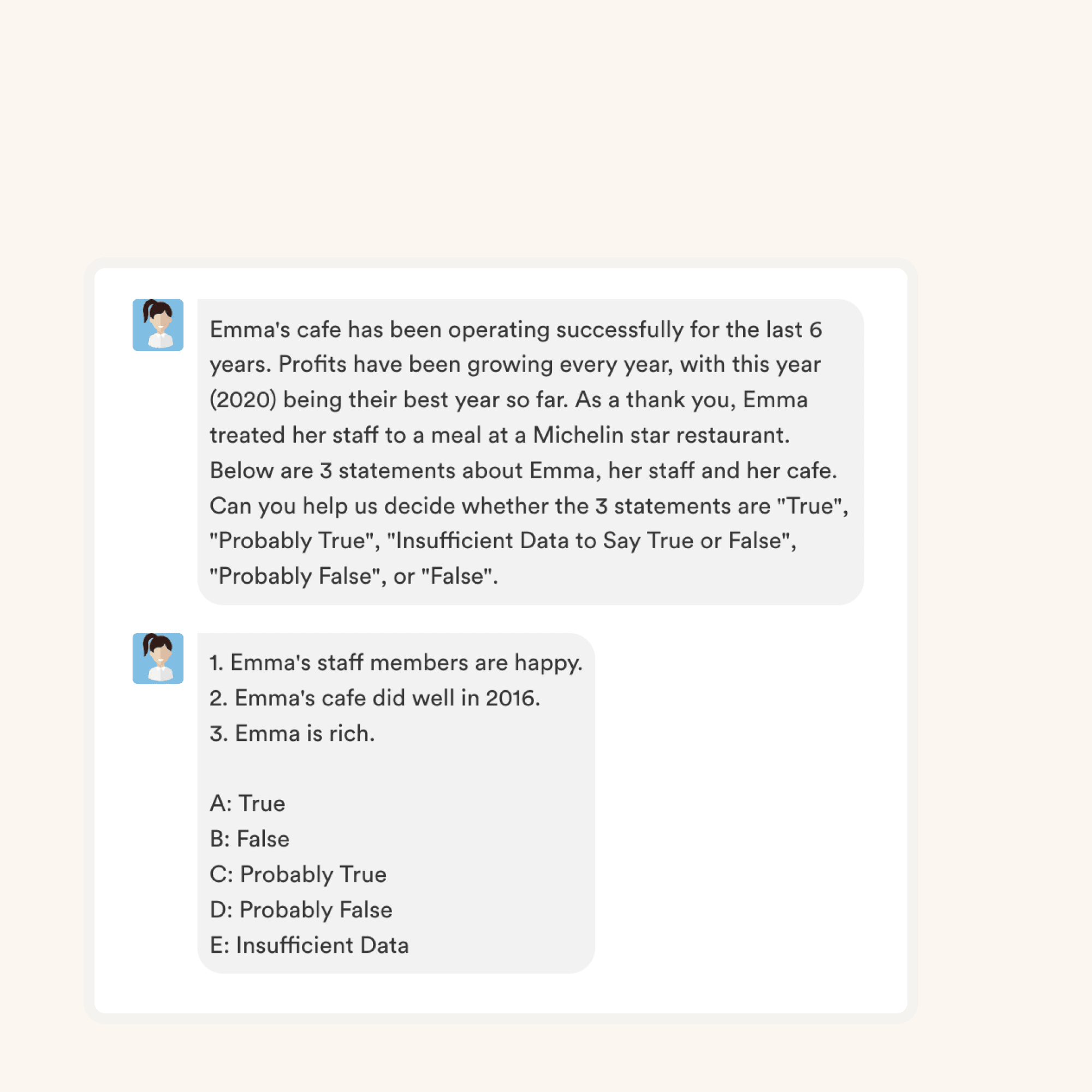
Non-googleable questions


We have a very high focus on the quality of questions that test for on-the-job skills. Every question is non-googleable and we have a very high bar for the level of subject matter experts we onboard to create these questions. We have crawlers to check if any of the questions are leaked online. If/ when a question gets leaked, we get an alert. We change the question for you & let you know.

How we design questions

These are just a small sample from our library of 15,000+ questions. The actual questions on this Orchestration Engineer Test will be non-googleable.

🧐 Question

Medium

Broker Replication
System Design
Distributed Systems
Message Processing
Fault Tolerance
Solve
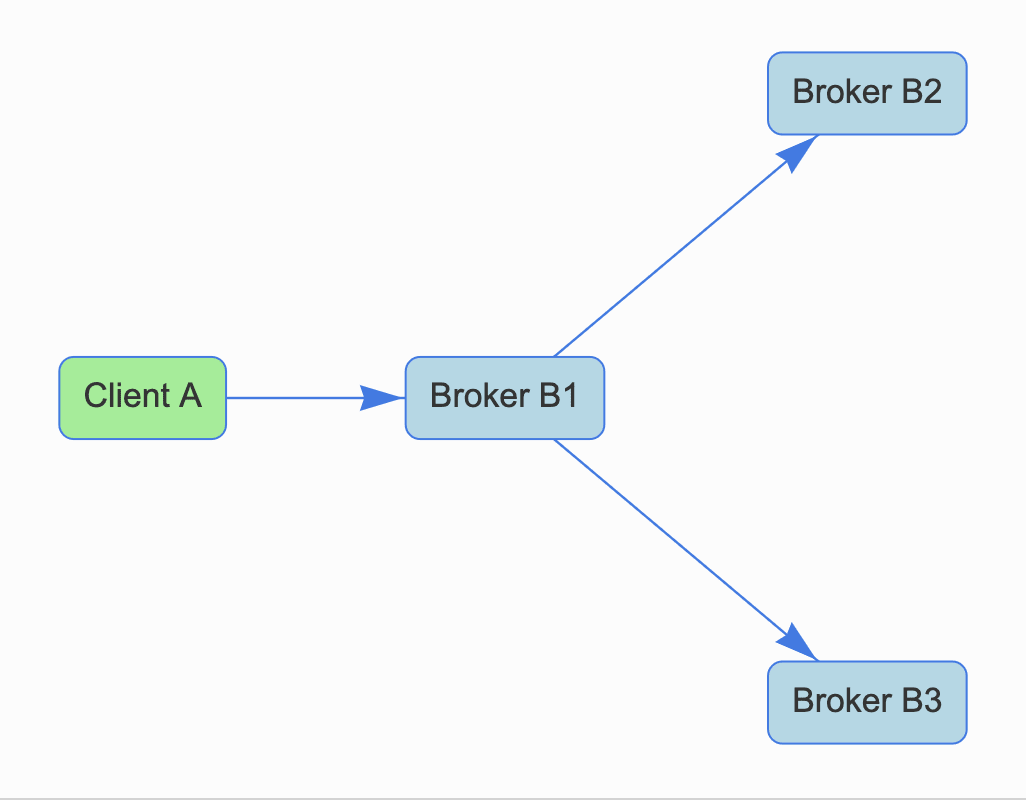
You are working on a large-scale, distributed, and fault-tolerant message processing system designed to handle high throughput and low latency requirements. The system is based on the publish-subscribe pattern and uses multiple brokers to distribute messages across various topics and partitions. In this architecture, both publishers and subscribers are considered clients. The brokers are responsible for replicating messages among themselves to ensure fault tolerance and data durability.
 image
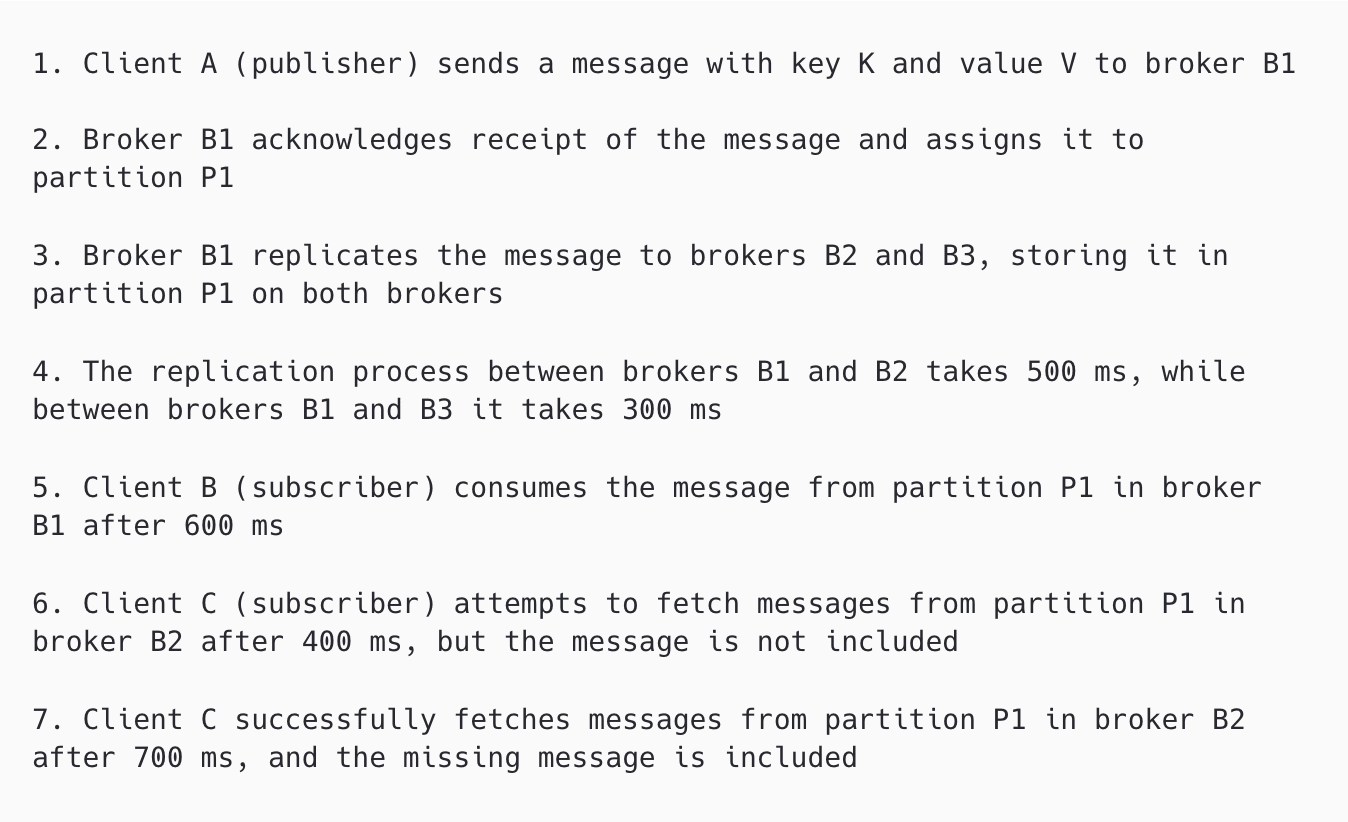
A client reports successfully publishing a message on a specific topic. However, one of the subscribers has not received the message. To investigate the issue, you have gathered detailed logs and system design data, as shown below:
 image
Based on the information provided, which of the following is the most likely reason for the issue?

A: The message was not published on the topic
B: Client C is not subscribed to the correct topic
C: There is a replication lag between brokers B1 and B2
D: Client C is consuming from the wrong broker
E: The message processing system failed to acknowledge the message

Medium

Load Balancer Latency
Debugging
Troubleshooting
Resource Management
Performance Tuning
Solve
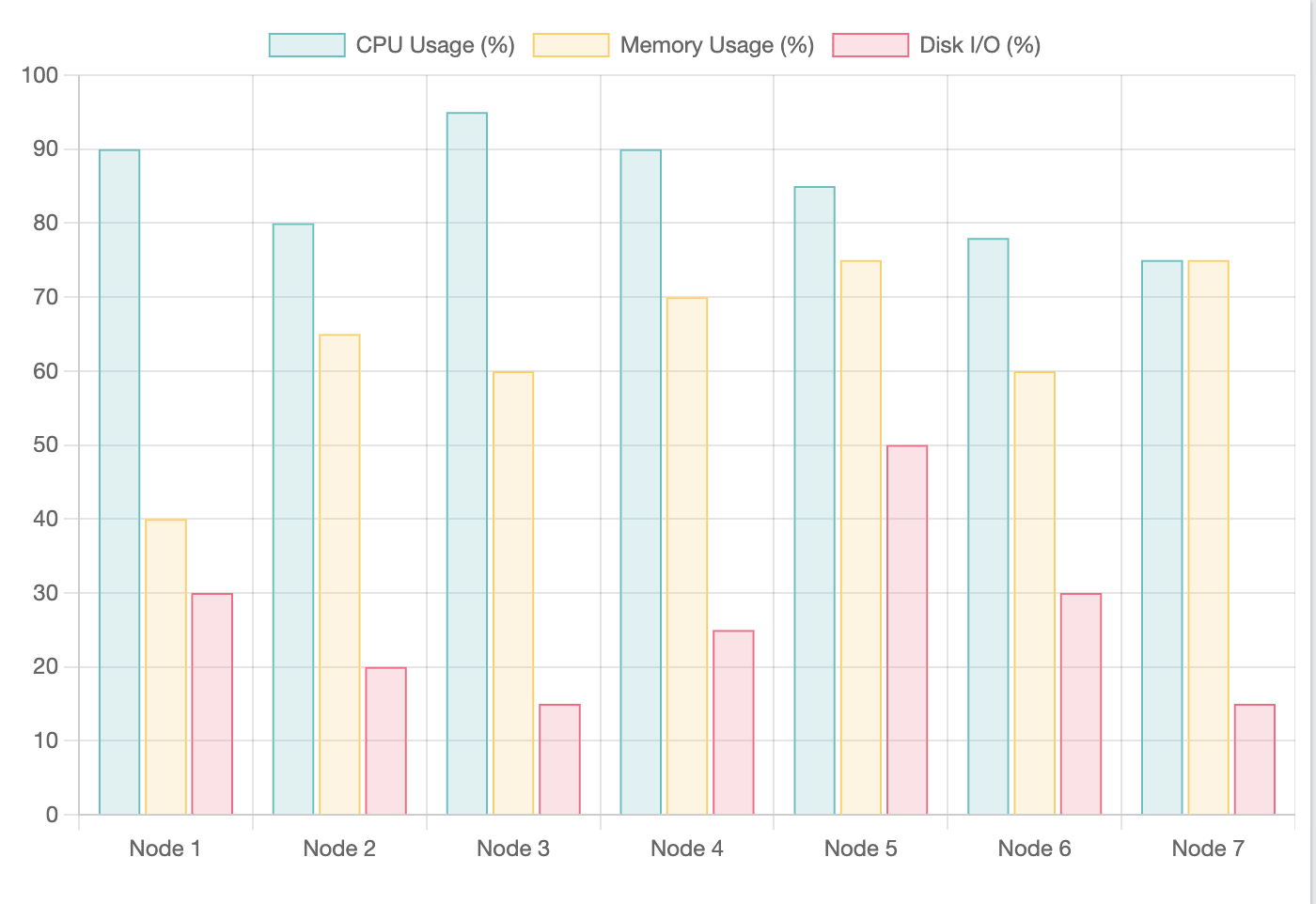
A backend service is experiencing intermittent latency spikes while processing incoming requests. The service is deployed in a multi-node environment with a load balancer in front. You suspect that the issue might be related to resource contention. You collect the following performance metrics from the affected nodes during a spike:
 image
Which of the following is the most probable cause of the latency spikes?
A: High memory usage on the affected nodes.
B: Disk I/O bottlenecks on the affected nodes.
C: Insufficient CPU resources on the affected nodes.
D: Uneven distribution of incoming requests by the load balancer.
E: Network latency between the load balancer and the backend nodes.

Medium

Optimal Data Replication and Consistency in Distributed Systems
Data Consistency
Load Balancing
Fault Tolerance
Solve
Consider a distributed e-commerce platform designed to handle high traffic volumes and ensure data consistency across its services. The platform uses a distributed database that replicates data across multiple nodes to increase availability and performance. To balance the load, it employs a load balancer that distributes user requests evenly across these nodes. The system is designed to tolerate the failure of up to two nodes without affecting the platform's overall availability.

Given the critical requirement for strong consistency to prevent issues such as overselling of products, the system uses a consensus algorithm for replication. The database is configured with a replication factor of 5, meaning each piece of data is stored on 5 nodes. For read and write operations to be considered successful, they must be acknowledged by a majority of the nodes involved in the operation.

Assuming all nodes have equal hardware resources and network latency between nodes is negligible, which of the following configurations would best meet the platform's requirements for high availability, performance, and strong consistency?
A: Reads require acknowledgment from 2 nodes, and writes require acknowledgment from 4 nodes.
B: Reads and writes both require acknowledgment from 3 nodes.
C: Reads require acknowledgment from 3 nodes, and writes require acknowledgment from 2 nodes.
D: Reads and writes both require acknowledgment from 4 nodes.
E: Reads require acknowledgment from 1 node, and writes require acknowledgment from 5 nodes.
F: Reads and writes both require acknowledgment from 5 nodes.

Easy

Real-time Vehicle Tracking for Logistics Company
Data Storage
Scalability
Real-time Updates
NoSQL
Solve
TransitTrack is a logistics company that needs to store real-time location data (latitude, longitude) of their vehicles as they move across the city. The system should be optimized for fast read and write operations to provide real-time tracking. TransitTrack can tolerate occasional data loss since the vehicle locations are updated frequently. Which of the following data storage solutions should TransitTrack implement for their vehicle tracking system?
A: Utilize a relational database management system (RDBMS) like PostgreSQL with a table indexed on the vehicle_id column for efficient data insertion and retrieval.
B: Implement an in-memory cache like Redis to store the vehicle location data, with the vehicle_id as the key and the latitude-longitude pair as the value.
C: Use a document-oriented database like MongoDB to store the vehicle location data as GeoJSON documents, enabling geospatial querying capabilities.
D: Develop a custom in-memory data structure using a spatial indexing technique like an R-tree to store and query the vehicle location data efficiently.
E: Use a time-series database like InfluxDB to store the vehicle location data along with timestamps, allowing for efficient querying and analysis of historical location data.

Medium

Session stickiness with ELB
Cookies
Elb Configuration
Load Balancing
Sticky Sessions
Solve
Johnny Bravo is setting up a new e-commerce store for men's clothing. He set up session stickiness with ELB. But he does not want ELB to manage the cookie, he wants the application to manage the cookie. When the server instance, which is bound to a cookie, crashes what do you expect will happen?
A: ELB will throw an error due to cookie unavailability
B: The response will have a cookie but stickiness will be deleted
C: The session will be sticky and ELB will route requests to another server as ELB keeps replicating the Cookie
D: The session will not be sticky until a new cookie is inserted

Medium

Updating UI after Encoding
UI Design
Decoupling
Async/await
Concurrency
Solve
Imagine you’re a developer at Songbird Inc, working on a music editing app for mobile devices. The app allows users to edit audio clips and export them in various audio formats. Once a user finishes editing a clip, they can choose an output format and initiate the encoding process. This encoding process can take a while depending on the chosen format and the length of the clip. Because it’s a mobile app, you want to avoid freezing the UI while encoding is in progress.

What’s the most appropriate approach to notify the user when the encoding is complete and the exported file is ready?
A: Directly modify the UI elements from within the encoding logic. When encoding finishes, the encoding system can directly tell the UI components to update themselves with the new information (e.g., change a button text to “Export Complete”).
B: Separate the UI update logic from the encoding process. The encoding system should trigger a custom event (e.g., “EncodingFinishedEvent”) upon completion. UI components can listen for this event and update themselves accordingly when it’s received.
C:  Have the UI code continuously check on the encoding status with a loop (often referred to as busy waiting or polling). The loop would keep checking a flag or variable set by the encoding system until the encoding is complete. Once complete, the UI can update itself.
D:  Introduce a central message queue or event bus. The encoding system can publish a message to the message queue upon finishing the task. Separate UI update logic would be subscribed to the queue, listening for relevant messages. When it receives the message about encoding completion, it can update the UI.
E: Let the encoding logic return a callback function to the UI layer when it’s initiated. Once encoding is finished, the encoding system calls back this function, allowing the UI to update itself.

Medium

Resource Analysis
Process Management
System Performance
Log Analysis
Solve
As a senior DevOps engineer, you are tasked with diagnosing performance issues on a Linux server running Ubuntu 20.04. The server hosts several critical applications, but lately, users have been experiencing significant slowness. Initial monitoring shows that CPU and memory utilization are consistently high. To identify the root cause, you check the output of `top` and `ps` commands, which indicate that a particular process is consuming an unusually high amount of resources. However, the process name is generic and does not clearly indicate which application or service it belongs to. You also examine `/var/log/syslog` for any unusual entries but find nothing out of the ordinary. Based on this situation, which of the following steps would most effectively help you identify and resolve the performance issue?
A: Increase the server's physical memory and CPU capacity.
B: Use the `lsof` command to identify the files opened by the suspect process.
C: Reboot the server to reset all processes.
D: Examine the `/etc/hosts` file for any incorrect configurations.
E: Run the `netstat` command to check for abnormal network activity.
F: Check the crontab for any recently added scheduled tasks.

Medium

Streamlined DevOps
Continuous Integration
Scripting
Git
Shell Scripting
Solve
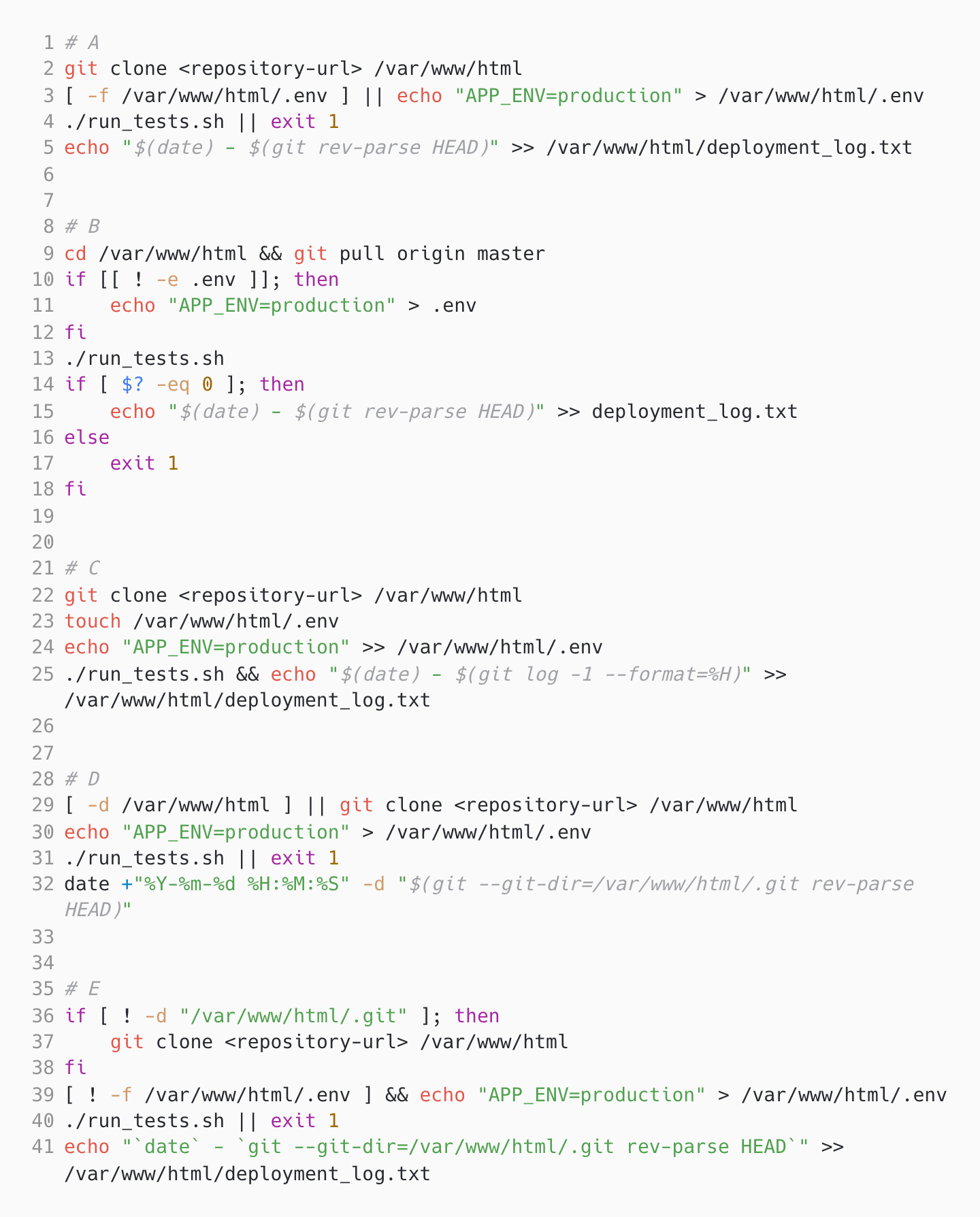
You are in charge of developing a Bash script for setting up a continuous integration pipeline for a web application. The source code is hosted in a Git repository. The script's goals include:

1. Ensuring the local copy of the repository in /var/www/html is updated to the latest version.
2. Creating a .env file with APP_ENV=production in the project root if it doesn't already exist.
3. Running a test suite with ./run_tests.sh and handling any test failures appropriately.
4. Logging the current timestamp and commit hash in deployment_log.txt in the project root if tests pass.

Which of the following script options would most effectively and safely accomplish these tasks?
 image
🧐 Question 🔧 Skill

Medium

Broker Replication
System Design
Distributed Systems
Message Processing
Fault Tolerance

3 mins

Backend
Solve

Medium

Load Balancer Latency
Debugging
Troubleshooting
Resource Management
Performance Tuning

3 mins

Backend
Solve

Medium

Optimal Data Replication and Consistency in Distributed Systems
Data Consistency
Load Balancing
Fault Tolerance

2 mins

System Design
Solve

Easy

Real-time Vehicle Tracking for Logistics Company
Data Storage
Scalability
Real-time Updates
NoSQL

2 mins

System Design
Solve

Medium

Session stickiness with ELB
Cookies
Elb Configuration
Load Balancing
Sticky Sessions

2 mins

System Design
Solve

Medium

Updating UI after Encoding
UI Design
Decoupling
Async/await
Concurrency

2 mins

System Design
Solve

Medium

Resource Analysis
Process Management
System Performance
Log Analysis

3 mins

DevOps
Solve

Medium

Streamlined DevOps
Continuous Integration
Scripting
Git
Shell Scripting

2 mins

DevOps
Solve
🧐 Question 🔧 Skill 💪 Difficulty ⌛ Time
Broker Replication
System Design
Distributed Systems
Message Processing
Fault Tolerance
Backend
Medium 3 mins
Solve
Load Balancer Latency
Debugging
Troubleshooting
Resource Management
Performance Tuning
Backend
Medium 3 mins
Solve
Optimal Data Replication and Consistency in Distributed Systems
Data Consistency
Load Balancing
Fault Tolerance
System Design
Medium 2 mins
Solve
Real-time Vehicle Tracking for Logistics Company
Data Storage
Scalability
Real-time Updates
NoSQL
System Design
Easy 2 mins
Solve
Session stickiness with ELB
Cookies
Elb Configuration
Load Balancing
Sticky Sessions
System Design
Medium 2 mins
Solve
Updating UI after Encoding
UI Design
Decoupling
Async/await
Concurrency
System Design
Medium 2 mins
Solve
Resource Analysis
Process Management
System Performance
Log Analysis
DevOps
Medium 3 mins
Solve
Streamlined DevOps
Continuous Integration
Scripting
Git
Shell Scripting
DevOps
Medium 2 mins
Solve
Get started for free
Preview questions
love bonito

With Adaface, we were able to optimise our initial screening process by upwards of 75%, freeing up precious time for both hiring managers and our talent acquisition team alike!

Brandon Lee, Head of People, Love, Bonito

Brandon
love bonito

It's very easy to share assessments with candidates and for candidates to use. We get good feedback from candidates about completing the tests. Adaface are very responsive and friendly to deal with.

Kirsty Wood, Human Resources, WillyWeather

Brandon
love bonito

We were able to close 106 positions in a record time of 45 days! Adaface enables us to conduct aptitude and psychometric assessments seamlessly. My hiring managers have never been happier with the quality of candidates shortlisted.

Amit Kataria, CHRO, Hanu

Brandon
love bonito

We evaluated several of their competitors and found Adaface to be the most compelling. Great library of questions that are designed to test for fit rather than memorization of algorithms.

Swayam Narain, CTO, Affable

Brandon

Why you should use Pre-employment Orchestration Engineer Test?

The Orchestration Engineer Test makes use of scenario-based questions to test for on-the-job skills as opposed to theoretical knowledge, ensuring that candidates who do well on this screening test have the relavant skills. The questions are designed to covered following on-the-job aspects:

  • Creating RESTful APIs with backend frameworks.
  • Setting up and managing databases.
  • Implementing microservices architecture effectively.
  • Configuring CI/CD pipelines for automation.
  • Utilizing version control systems efficiently.
  • Deploying applications in cloud environments.
  • Monitoring applications with logging tools.
  • Using Docker for containerizing applications.
  • Understanding Kubernetes for orchestration.
  • Managing server load and scalability.

Once the test is sent to a candidate, the candidate receives a link in email to take the test. For each candidate, you will receive a detailed report with skills breakdown and benchmarks to shortlist the top candidates from your pool.

What topics are covered in the Orchestration Engineer Test?

Backend Development: Backend development involves creating the server-side logic and functionality of applications, focusing on databases, servers, and APIs necessary for front-end operations. It ensures data processing, storage, and manipulation that form the backbone of user-facing services.

System Design: System design is about structuring technology systems to meet specified requirements, balancing scalability, performance, and maintainability. Understanding system design is crucial for developing robust architectures that can evolve with changing requirements and business needs.

DevOps Practices: DevOps practices integrate software development and IT operations, aiming to shorten development cycles, increase deployment frequency, and maintain service stability. It promotes continuous collaboration and automation, leading to more efficient and reliable software delivery.

Microservices Architecture: Microservices architecture decomposes complex applications into independent, deployable services that communicate with each other. This architectural style enhances scalability and flexibility, allowing teams to iterate and deploy services without impacting other components.

Containerization with Docker: Containerization encapsulates application software in Docker containers, providing consistency across various environments. By using Docker, developers ensure the software runs seamlessly from development to production.

Kubernetes Orchestration: Kubernetes orchestrates container deployment, scaling, and operations across clusters of hosts. This orchestration technology simplifies managing containerized applications, ensuring efficient deployments, scaling, and high availability.

CI CD Pipelines: Continuous Integration and Continuous Deployment (CI/CD) pipelines automate the merging, testing, and deployment of code changes, accelerating development while ensuring quality. Proficiency in CI/CD signifies an ability to maintain robust and agile software workflows.

Cloud Infrastructure Management: Cloud infrastructure management involves provisioning, configuring, and managing cloud resources to optimize performance and cost. It is vital to understand cloud technologies to scale applications efficiently and leverage cloud economies.

Scalability and Load Balancing: Scalability allows systems to handle growing amounts of load or traffic seamlessly, often achieved through load balancing, which distributes workloads across multiple resources. Skills in these areas ensure that applications remain performant under varying demands.

APIs and Web Services: APIs and web services define how software components interact, providing interfaces for external systems to access application functionality. This skillset is critical for creating complex systems and facilitating integrations.

Monitoring and Logging: Monitoring and logging involve tracking and recording system activities, helping in identifying and resolving issues proactively. These practices ensure system reliability and performance, enabling quick responses to potential failures.

Version Control Systems: Version control systems like Git track changes to codebase, enabling collaboration and history tracking among development teams. Mastery of version control is essential for managing code effectively and coordinating team efforts.

Full list of covered topics

The actual topics of the questions in the final test will depend on your job description and requirements. However, here's a list of topics you can expect the questions for Orchestration Engineer Test to be based on.

Microservices
Docker Containers
Kubernetes Cluster
CI CD Pipelines
Cloud Management
Load Balancing
Scalability
API Integration
Web Services
Monitoring Tools
Logging Systems
Version Control
Git Workflows
Git Branching
REST APIs
GraphQL
Service Mesh
Docker Files
Kubernetes Pods
Node.js Backend
Data Modeling
Database Design
Caching Strategies
Redis Caching
Queue Systems
Message Brokers
Database Sharding
Database Replication
Serverless Computing
Event Driven Design
Infrastructure as Code
Terraform
Ansible
Kubernetes Services
Docker Networking
Kubernetes Ingress
Kubernetes ConfigMaps
Elastic Load Balancer
Prometheus Monitoring
Grafana Dashboards
Log Aggregation
Disaster Recovery
Continuous Deployment
Continuous Integration
Fault Tolerance
Rate Limiting
Throttling
Circuit Breaker
Distributed Tracing
Network Security
SSL Certificates
OAuth Authentication
SAML Single Sign-On
JWT Tokens

What roles can I use the Orchestration Engineer Test for?

  • DevOps Engineer
  • Site Reliability Engineer
  • Backend Developer
  • Cloud Engineer
  • System Architect
  • Infrastructure Engineer
  • Orchestration Specialist
  • Full Stack Developer
  • Software Engineer
  • Technical Lead

How is the Orchestration Engineer Test customized for senior candidates?

For intermediate/ experienced candidates, we customize the assessment questions to include advanced topics and increase the difficulty level of the questions. This might include adding questions on topics like

  • Optimizing backend code for performance.
  • Designing scalable system architectures.
  • Implementing secure authentication systems.
  • Configuring network settings for cloud apps.
  • Automating deployments using Kubernetes.
  • Setting up scalable load balancers.
  • Integrating third-party APIs and services.
  • Conducting system performance tuning.
  • Ensuring high availability of applications.
  • Managing code branches and merge conflicts.

The coding question for experienced candidates will be of a higher difficulty level to evaluate more hands-on experience.

Try the most advanced candidate assessment platform

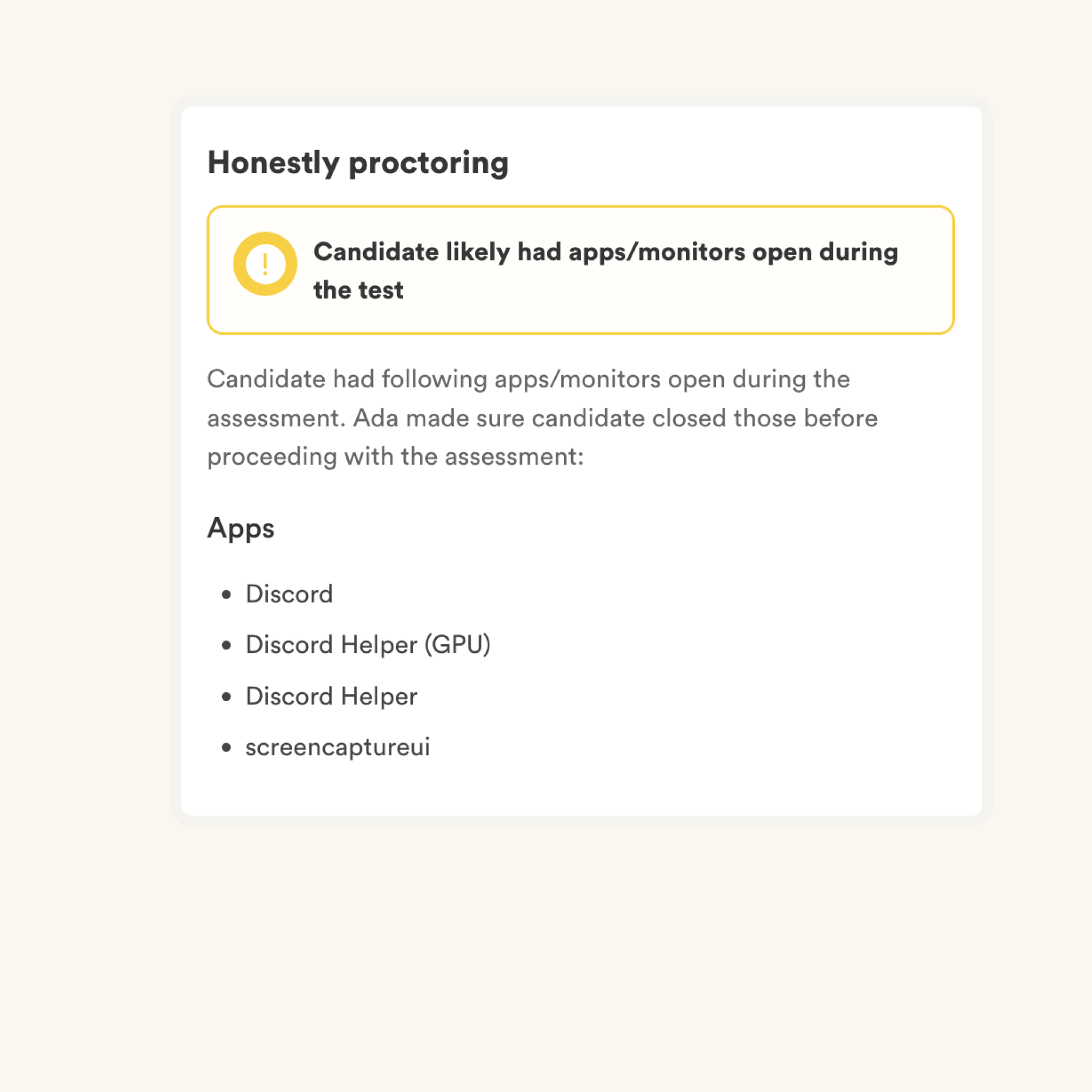
AI Cheating Detection with Honestly

ChatGPT Protection

Non-googleable Questions

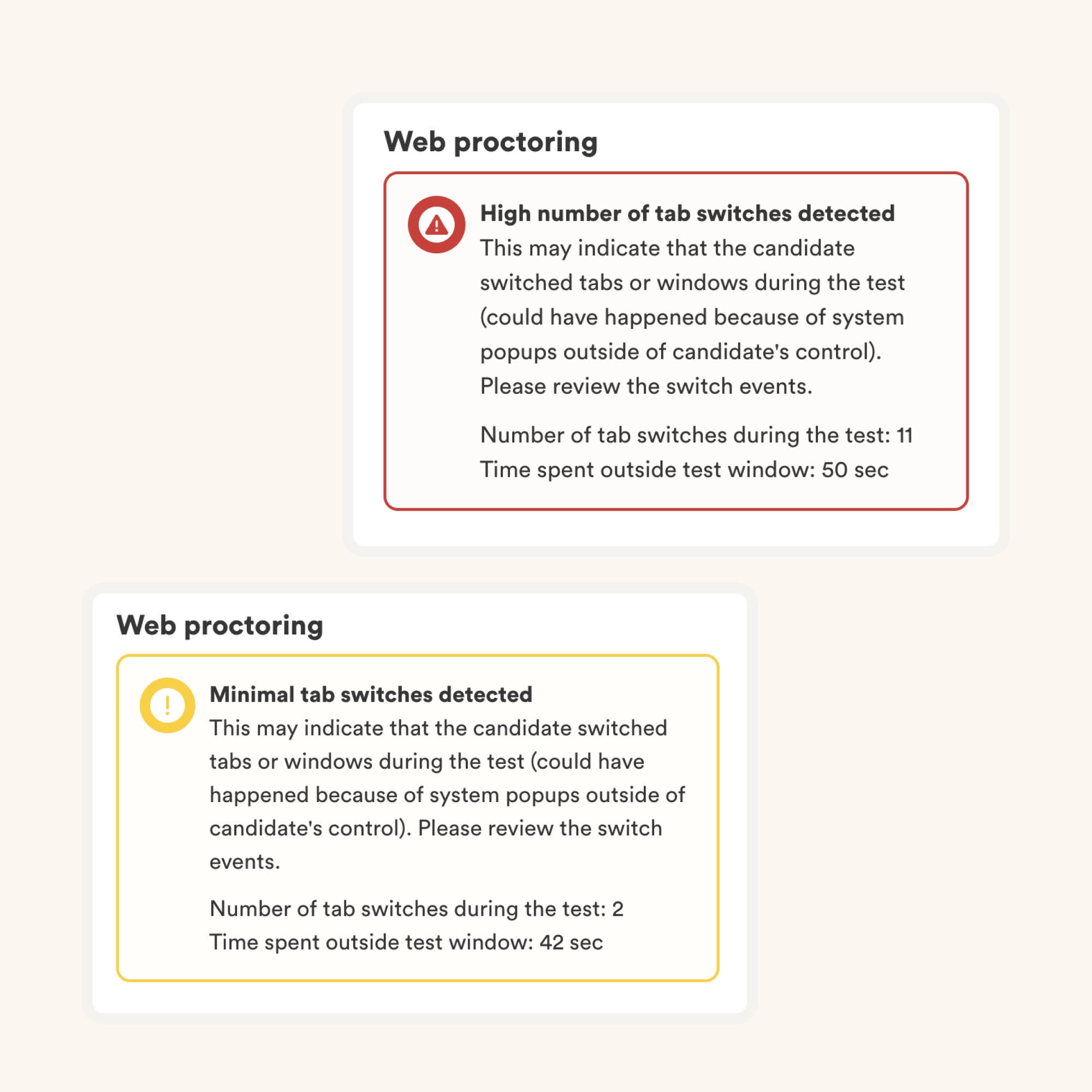
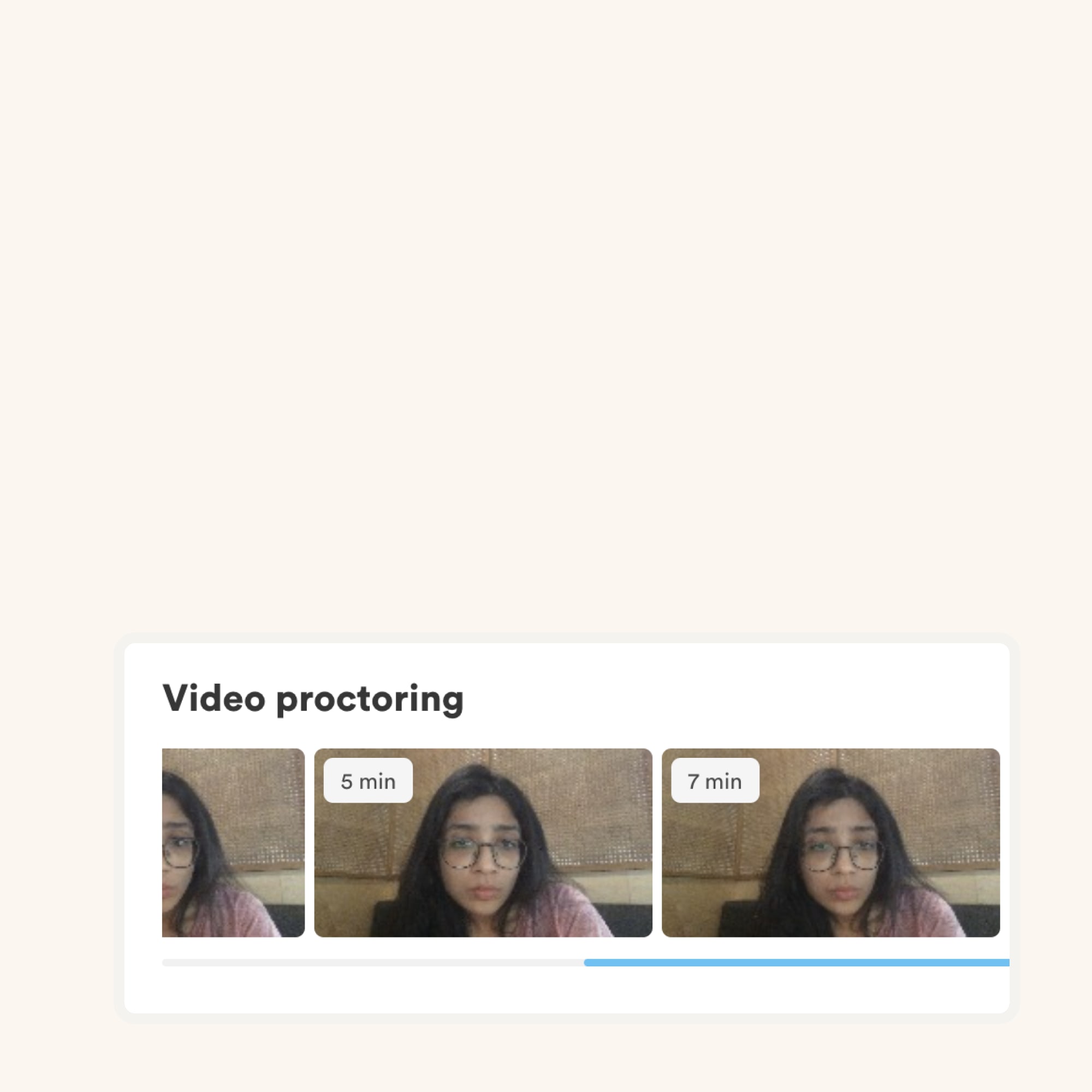
Web Proctoring

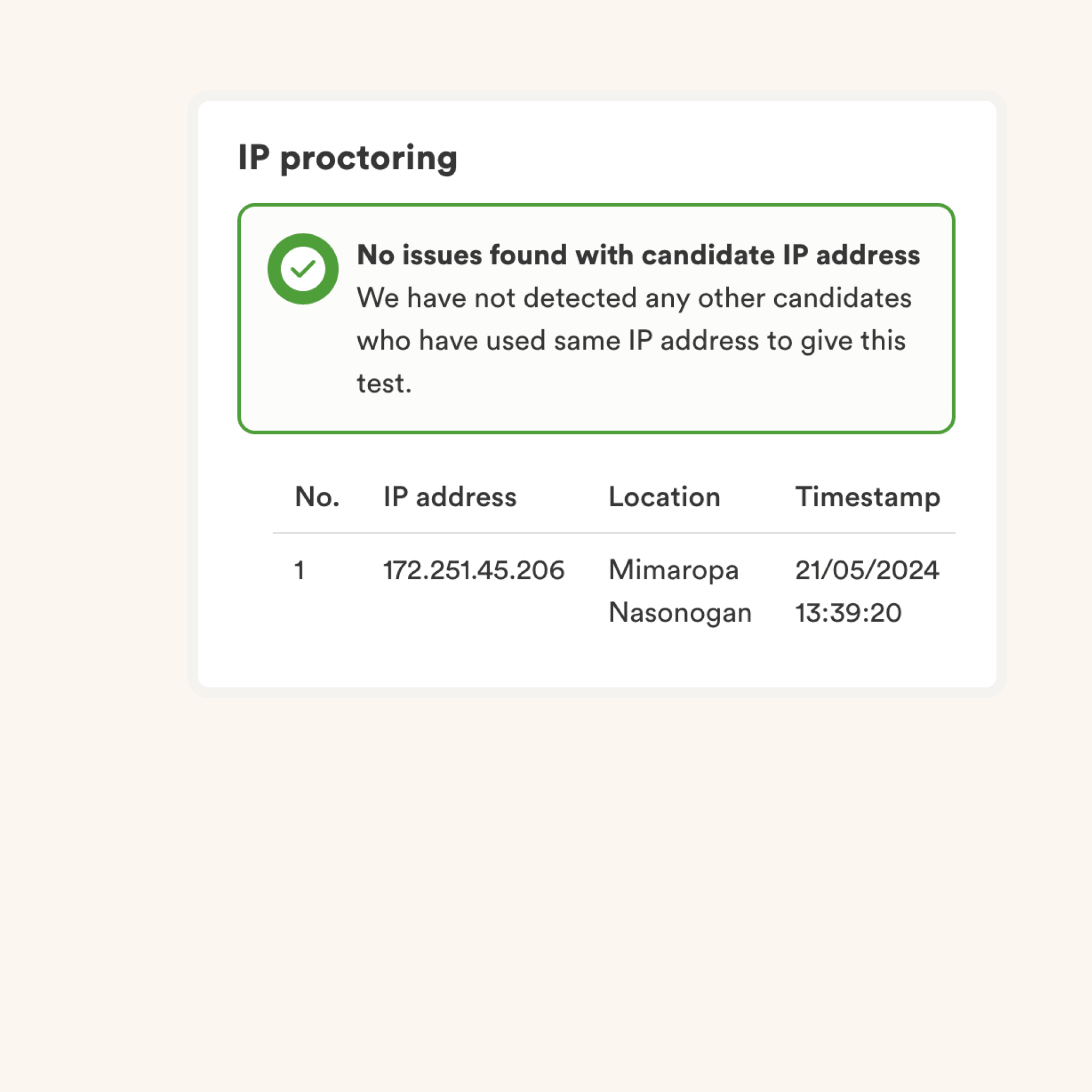
IP Proctoring

Webcam Proctoring

MCQ Questions

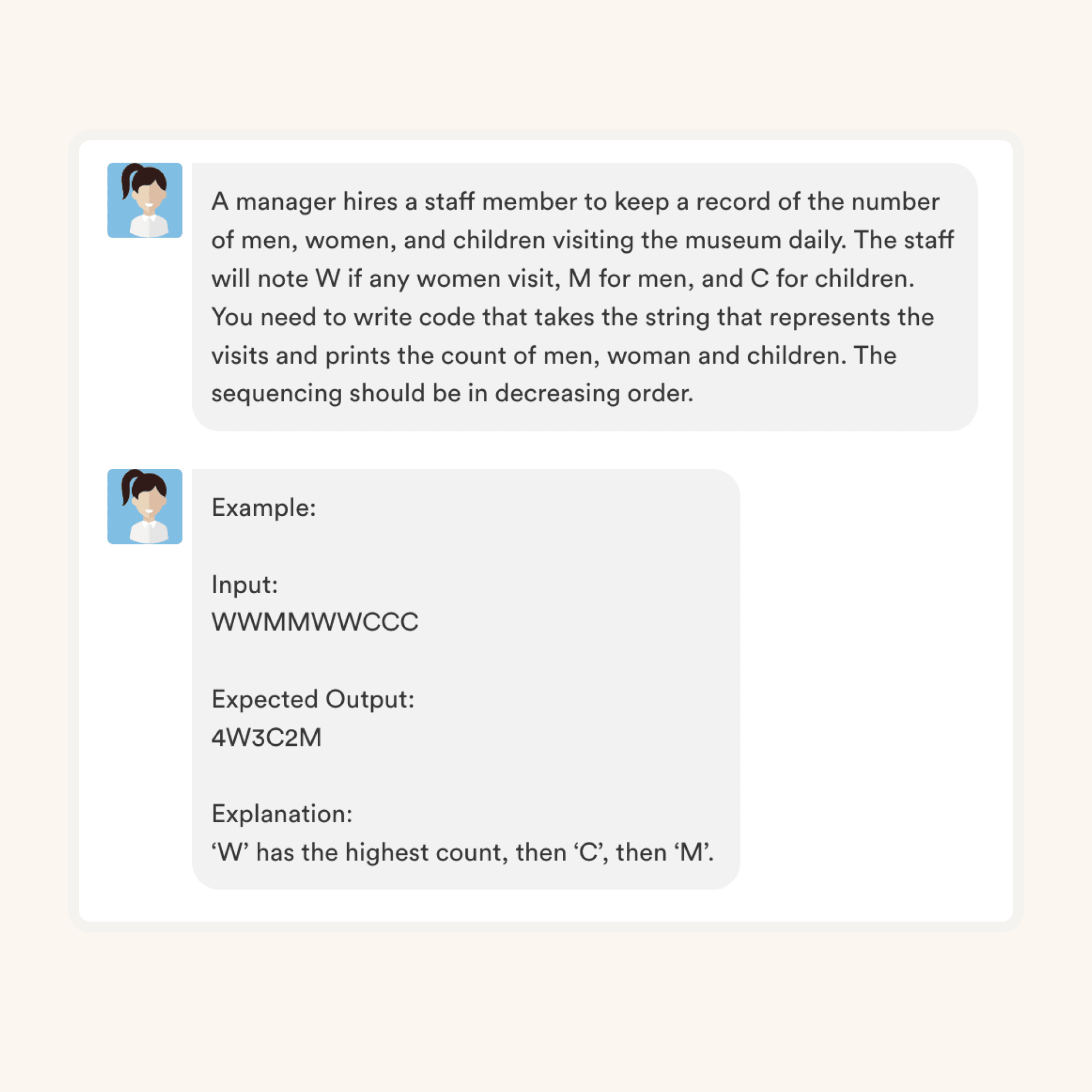
Coding Questions

Typing Questions

Personality Questions

Custom Questions

Ready-to-use Tests

Custom Tests

Custom Branding

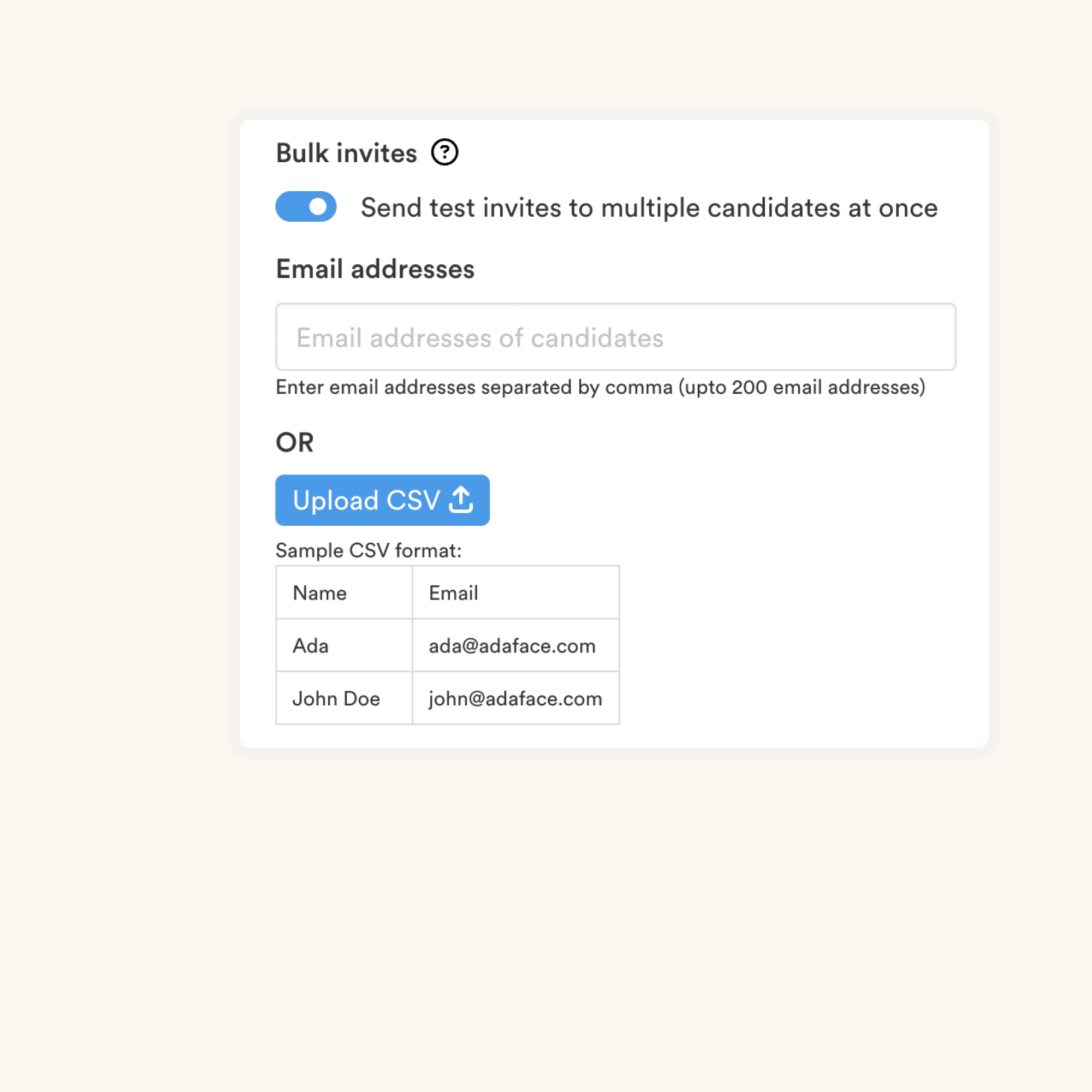
Bulk Invites

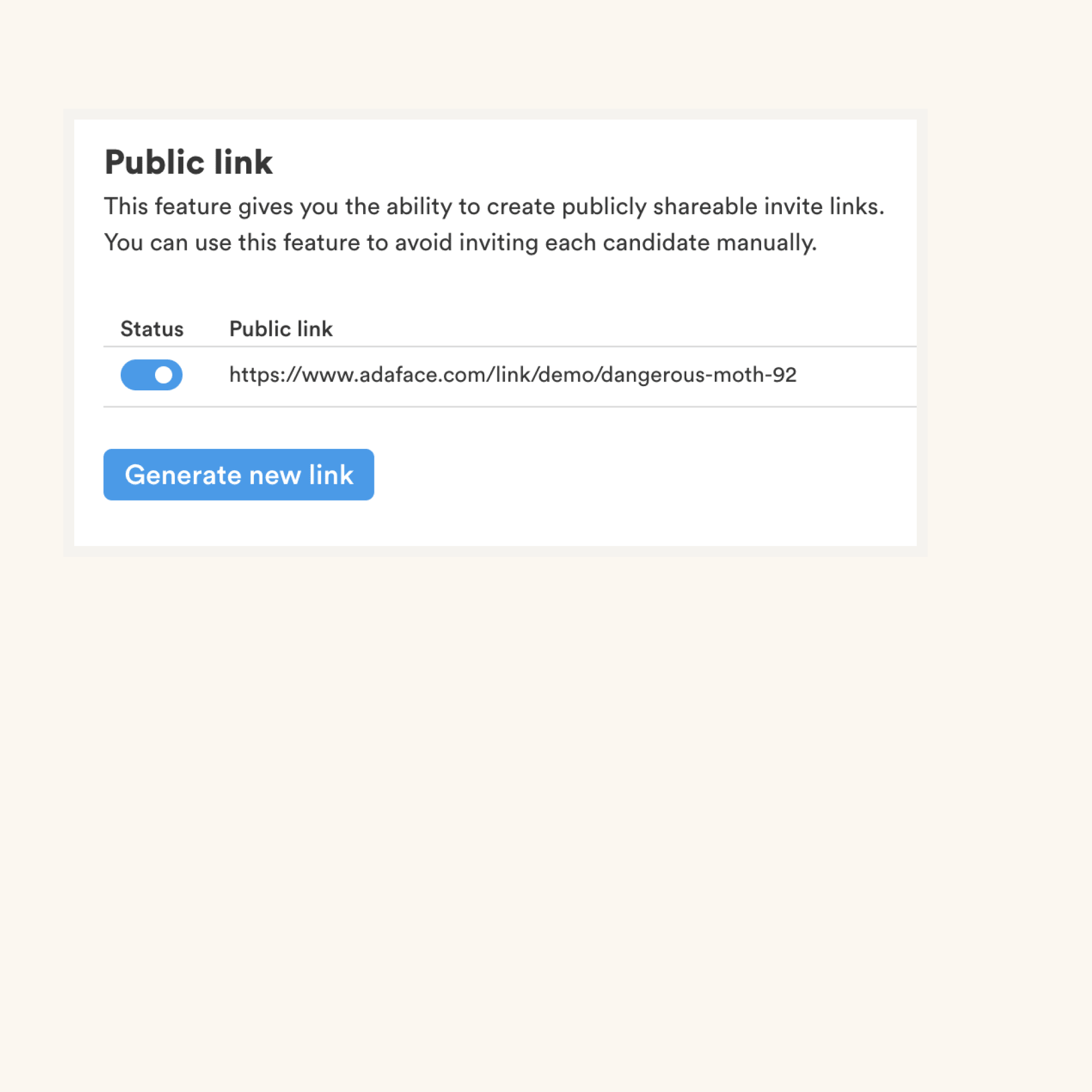
Public Links

ATS Integrations

Multiple Question Sets

Custom API integrations

Role-based Access

Priority Support

GDPR Compliance

Screen candidates in 3 easy steps

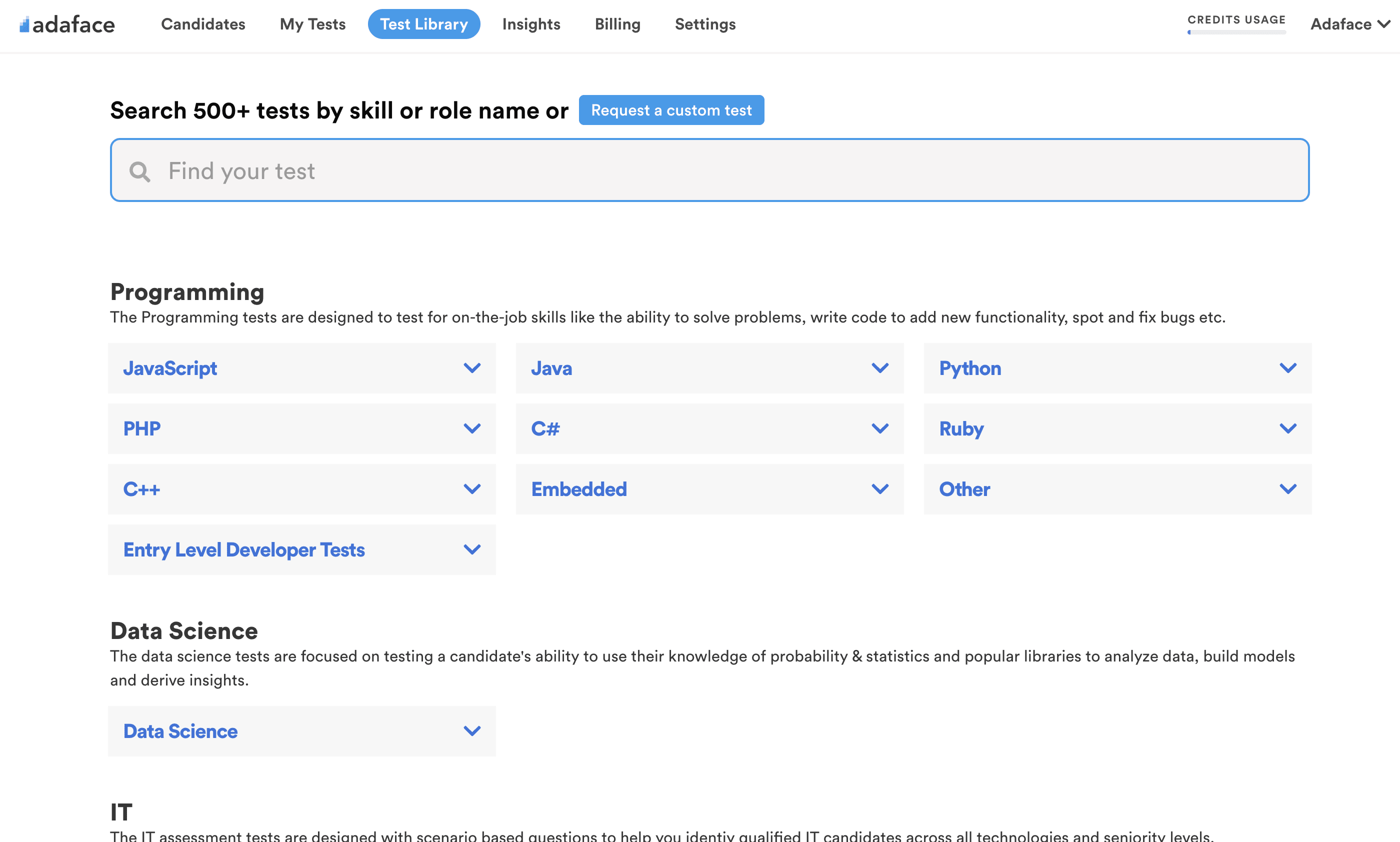
Pick a test from over 500+ tests

The Adaface test library features 500+ tests to enable you to test candidates on all popular skills- everything from programming languages, software frameworks, devops, logical reasoning, abstract reasoning, critical thinking, fluid intelligence, content marketing, talent acquisition, customer service, accounting, product management, sales and more.

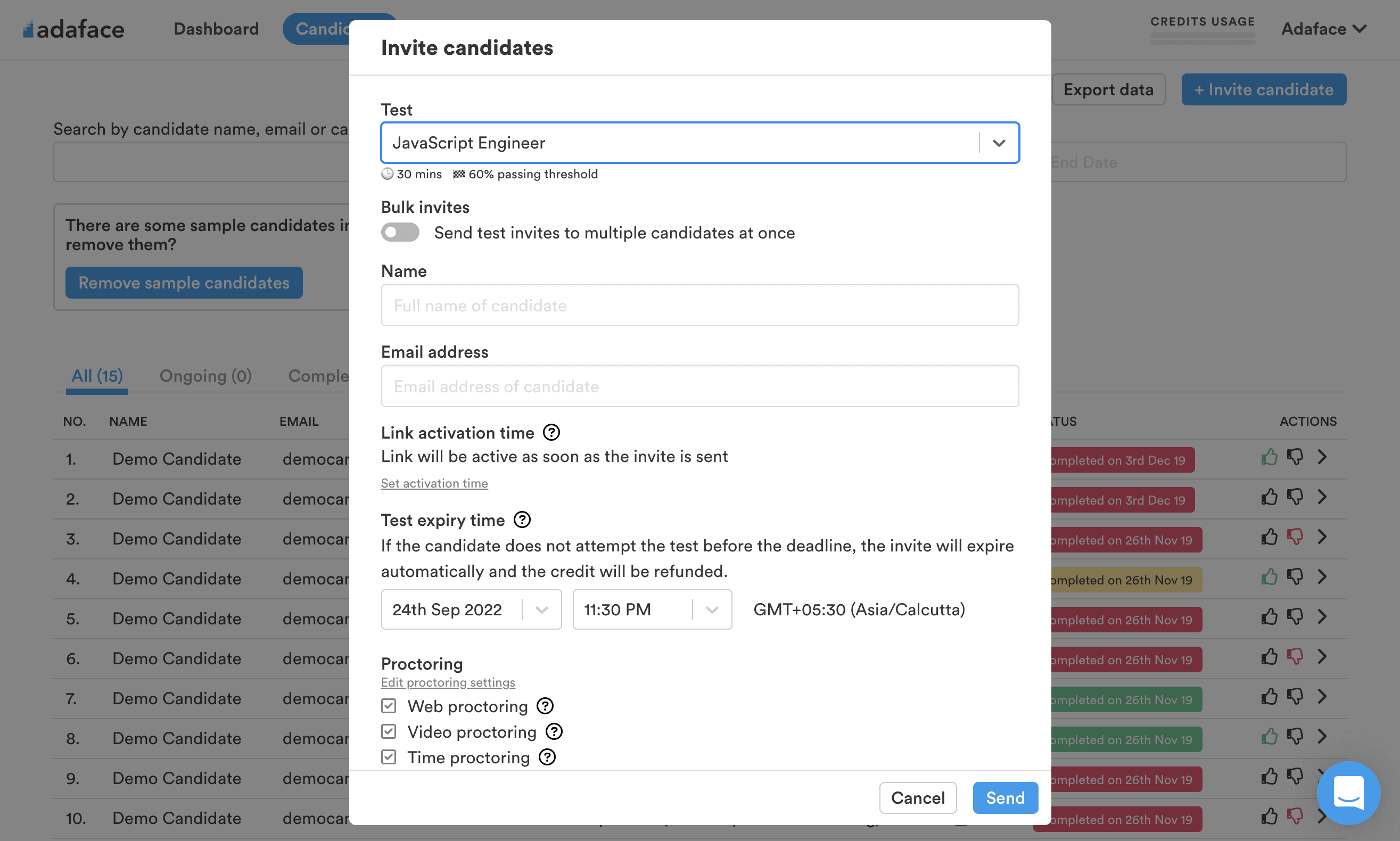
Invite your candidates with 2-clicks

Make informed hiring decisions

Get started for free
Preview questions

Have questions about the Orchestration Engineer Hiring Test?

What is Orchestration Engineer Test?

The Orchestration Engineer Test is designed to assess skills in Backend Development, System Design, and DevOps Practices. It evaluates candidates' understanding of microservices architecture, Kubernetes orchestration, and CI/CD pipelines. Companies use this test to ensure they hire engineers capable of managing modern cloud infrastructure and automation tasks.

Can I combine the Orchestration Engineer Test with Kubernetes questions?

Yes, recruiters can request a single custom test that includes questions specific to Kubernetes. For more information on how we assess Kubernetes skills, you can refer to our Kubernetes Online Test.

What skills are evaluated for senior roles in the Orchestration Engineer Test?

In the Orchestration Engineer Test, senior candidates are assessed on skills such as optimizing backend code for performance, designing scalable system architectures, and automating deployments using Kubernetes. The test also evaluates secure authentication system implementation and API integration capabilities.

How to use Orchestration Engineer Test in my hiring process?

Leverage our assessment tool as an initial screening step. Share the assessment link in job postings or via email invitations. This process replaces resume screening, fast-tracking the identification of skilled candidates.

What are the main tests for Cloud Infrastructure Management?

The Orchestration Engineer Test is one of several assessments related to Cloud Infrastructure Management. Other important tests include the AWS DevOps Test, Azure DevOps Test, and the Cloud Computing Test.

Can I combine multiple skills into one custom assessment?

Yes, absolutely. Custom assessments are set up based on your job description, and will include questions on all must-have skills you specify. Here's a quick guide on how you can request a custom test.

Do you have any anti-cheating or proctoring features in place?

We have the following anti-cheating features in place:

  • Hidden AI Tools Detection with Honestly
  • Non-googleable questions
  • IP proctoring
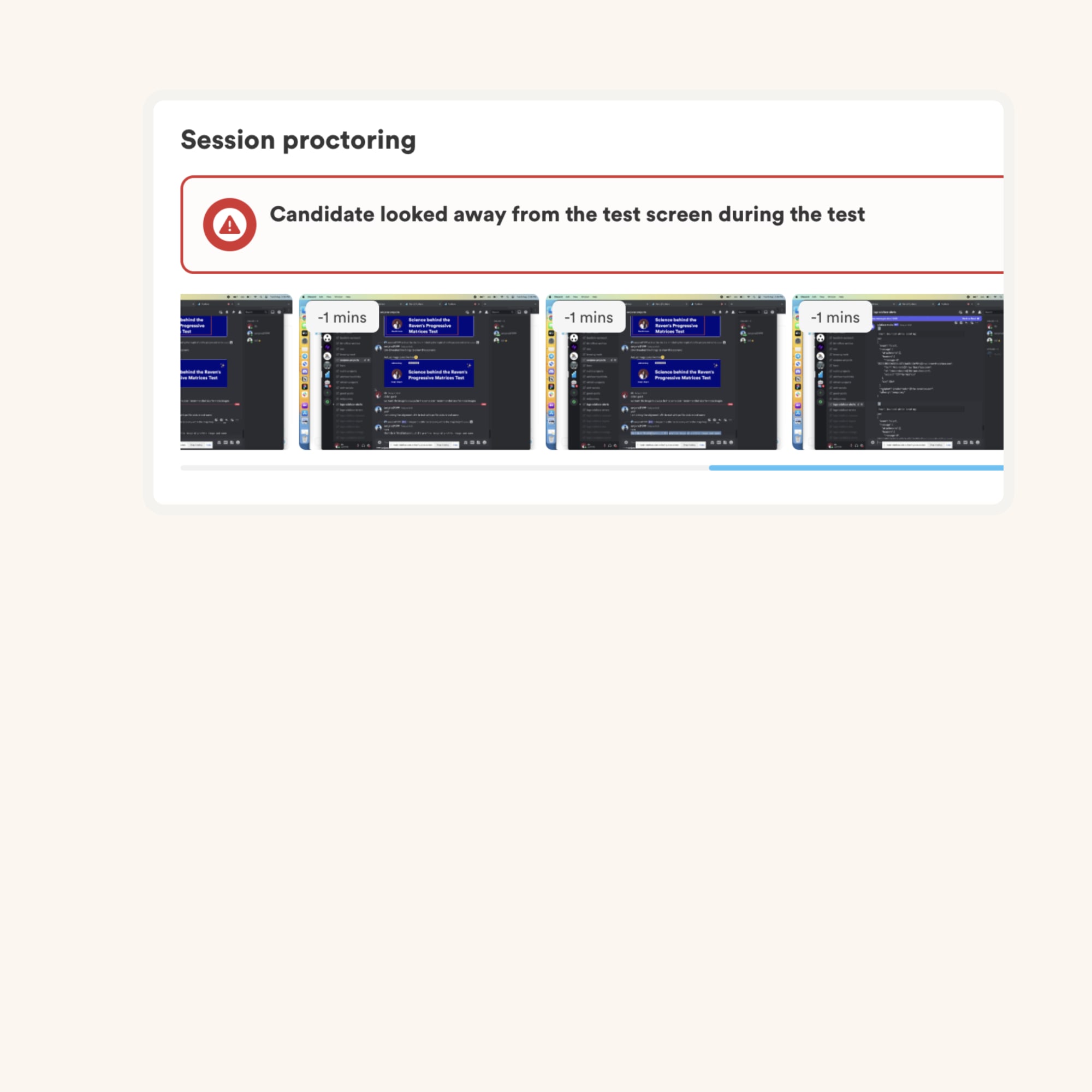
  • Screen proctoring
  • Web proctoring
  • Webcam proctoring
  • Plagiarism detection
  • Secure browser
  • Copy paste protection

Read more about the proctoring features.

How do I interpret test scores?

The primary thing to keep in mind is that an assessment is an elimination tool, not a selection tool. A skills assessment is optimized to help you eliminate candidates who are not technically qualified for the role, it is not optimized to help you find the best candidate for the role. So the ideal way to use an assessment is to decide a threshold score (typically 55%, we help you benchmark) and invite all candidates who score above the threshold for the next rounds of interview.

What experience level can I use this test for?

Each Adaface assessment is customized to your job description/ ideal candidate persona (our subject matter experts will pick the right questions for your assessment from our library of 10000+ questions). This assessment can be customized for any experience level.

Does every candidate get the same questions?

Yes, it makes it much easier for you to compare candidates. Options for MCQ questions and the order of questions are randomized. We have anti-cheating/ proctoring features in place. In our enterprise plan, we also have the option to create multiple versions of the same assessment with questions of similar difficulty levels.

I'm a candidate. Can I try a practice test?

No. Unfortunately, we do not support practice tests at the moment. However, you can use our sample questions for practice.

What is the cost of using this test?

You can check out our pricing plans.

Can I get a free trial?

Yes, you can sign up for free and preview this test.

I just moved to a paid plan. How can I request a custom assessment?

Here is a quick guide on how to request a custom assessment on Adaface.

View sample scorecard


Along with scorecards that report the performance of the candidate in detail, you also receive a comparative analysis against the company average and industry standards.
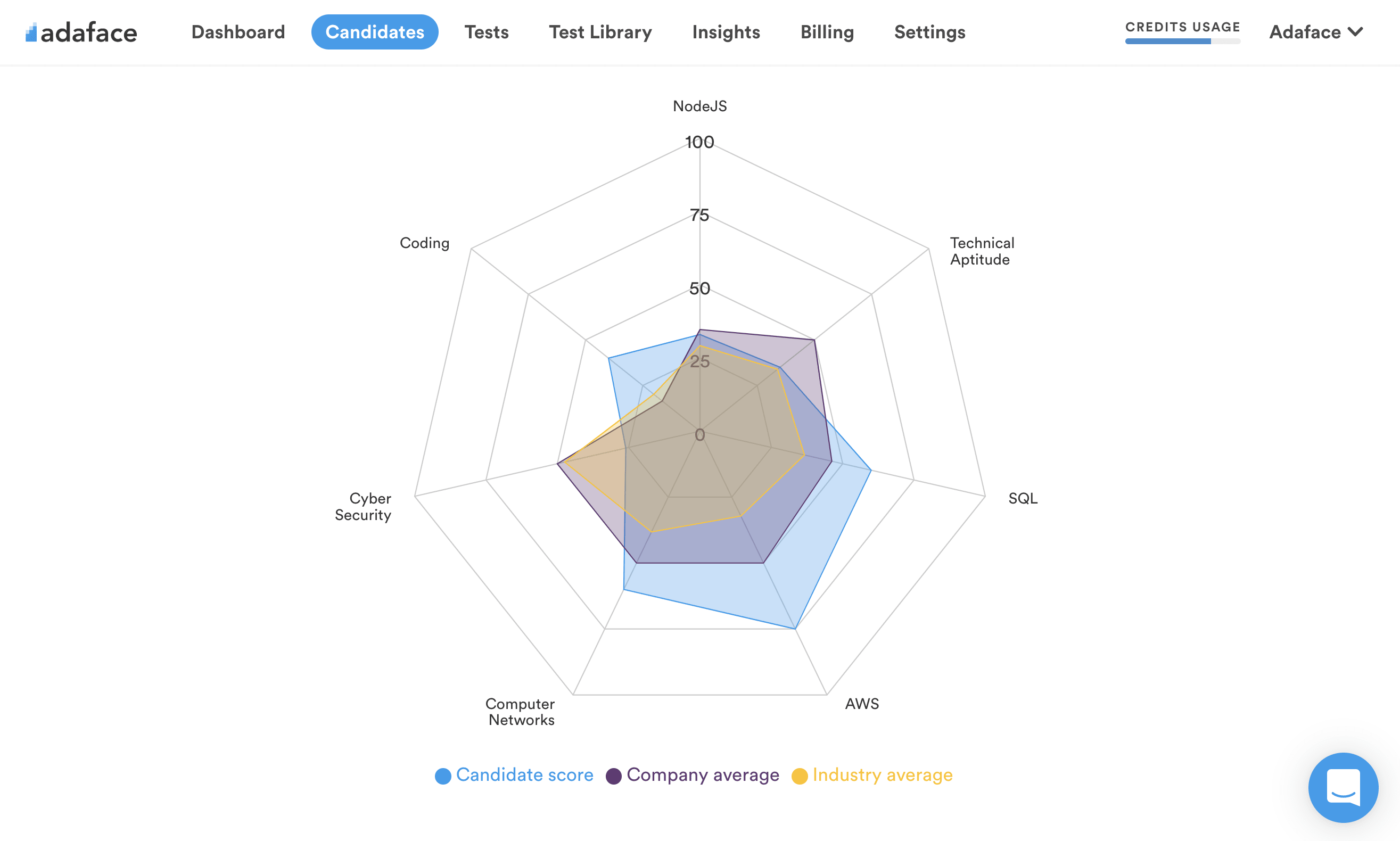
View sample scorecard
customers across world
Join 1200+ companies in 80+ countries.
Try the most candidate friendly skills assessment tool today.
g2 badges
Ready to use the Adaface Orchestration Engineer Test?
logo
40 min tests.
No trick questions.
Accurate shortlisting.
Terms Privacy Trust Guide
ada
Ada
● Online
Previous
Score: NA
Next
✖️