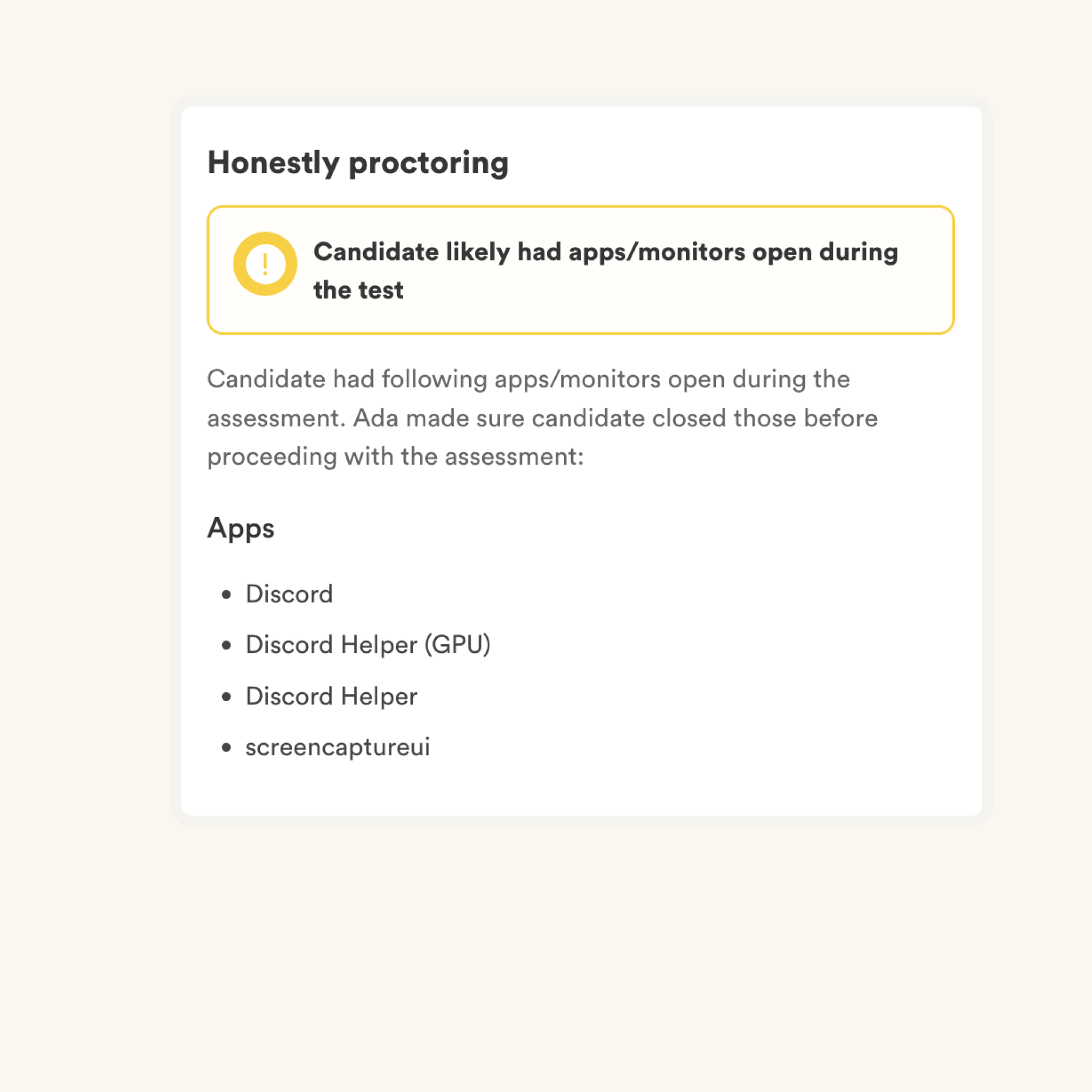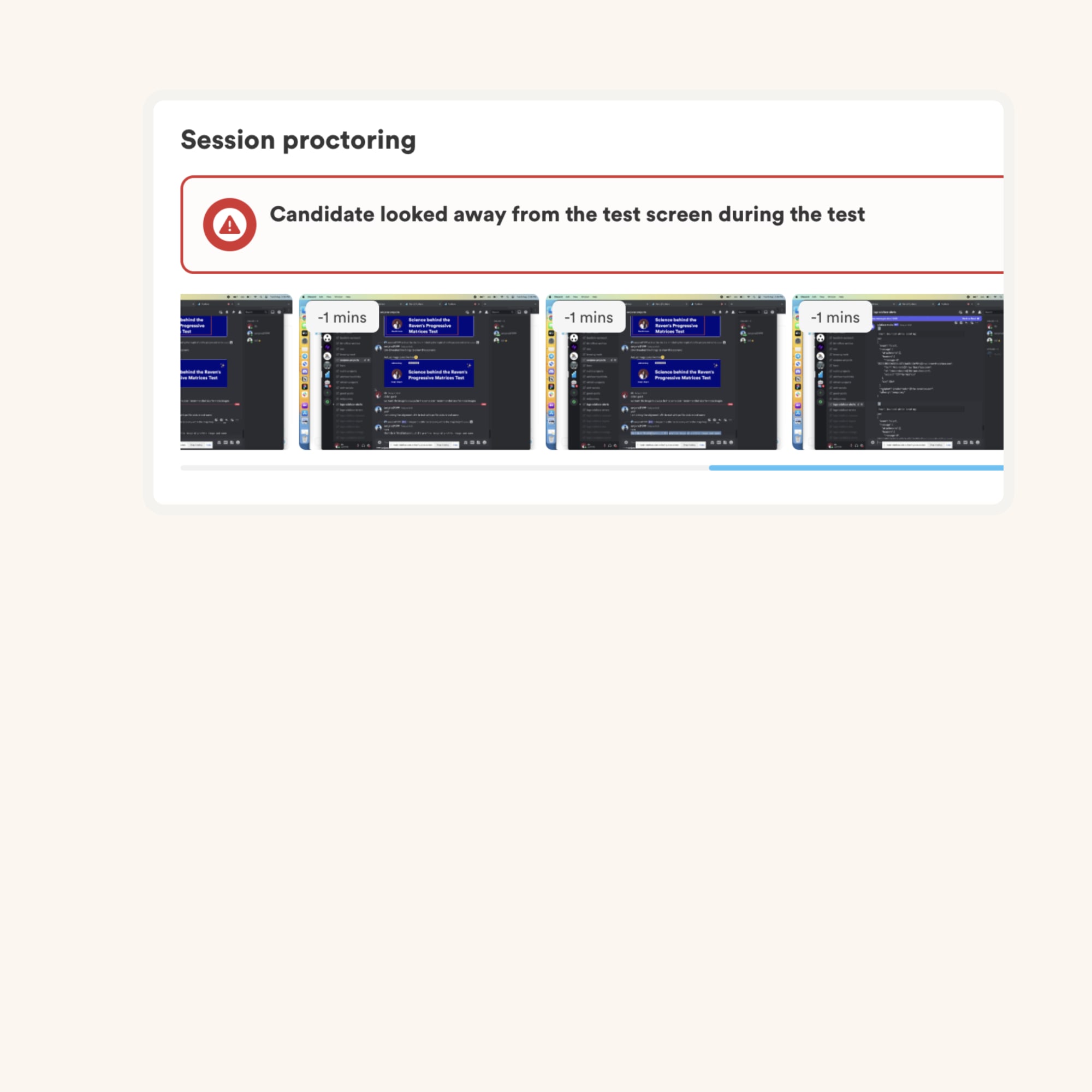
Search test library by skills or roles
⌘ K

Agent Engineer (LangChain) Test

The Agent Engineer (LangChain) Test assesses a candidate's proficiency in developing AI agents using the LangChain framework. It evaluates skills in prompt engineering, generative AI, agent development, and Python programming through scenario-based MCQs and a coding question. This test is designed to ensure candidates can effectively use LangChain in real-world applications.

Covered skills:

  • Prompt Engineering
  • Generative AI
  • Agent Development
  • Python Programming
  • LangChain Framework
  • Natural Language Processing
  • AI Model Deployment
  • Data Handling in Python
  • LangChain Agent Construction
  • Debugging LangChain Applications
Get started for free
Preview questions

About the Agent Engineer (LangChain) Assessment Test


The Agent Engineer (LangChain) Test helps recruiters and hiring managers identify qualified candidates from a pool of resumes, and helps in taking objective hiring decisions. It reduces the administrative overhead of interviewing too many candidates and saves time by filtering out unqualified candidates at the first step of the hiring process.

The test screens for the following skills that hiring managers look for in candidates:

  • Proficient in crafting clear and precise prompts for AI models
  • Capable of utilizing generative AI tools to produce accurate outputs
  • Skilled in designing and developing agents for automation tasks
  • Able to write efficient and readable Python code
  • Experienced with LangChain framework for building AI applications
  • Understands natural language processing concepts and applications
  • Knowledgeable about deploying AI models effectively and securely
  • Proficient in data manipulation and handling using Python libraries
  • Competent in constructing advanced agents using LangChain
  • Adept at debugging and troubleshooting LangChain applications

1200+ customers in 80 countries


Use Adaface tests trusted by recruitment teams globally. Adaface skill assessments measure on-the-job skills of candidates, providing employers with an accurate tool for screening potential hires.

customers in 75 countries
Get started for free
Preview questions

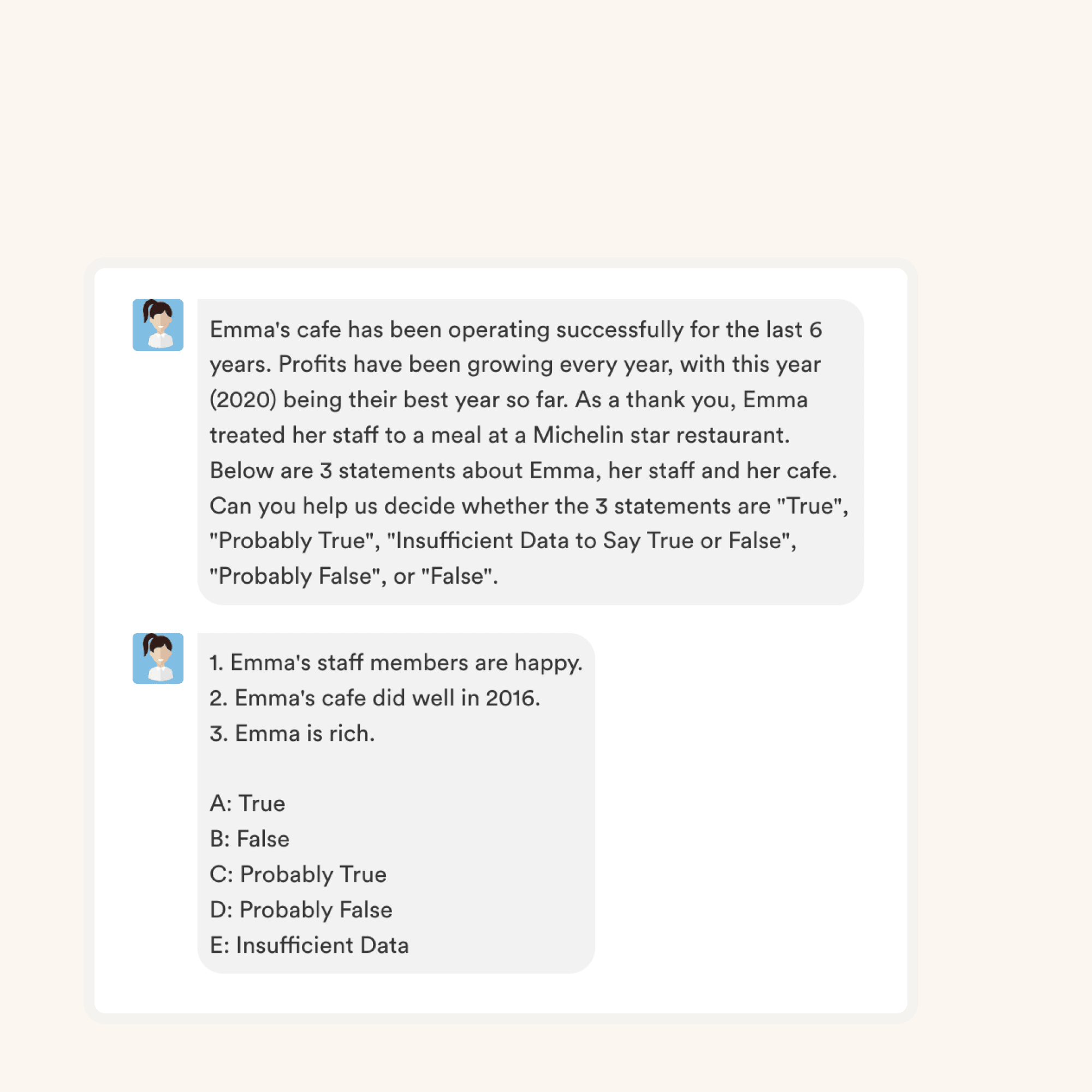
Non-googleable questions


We have a very high focus on the quality of questions that test for on-the-job skills. Every question is non-googleable and we have a very high bar for the level of subject matter experts we onboard to create these questions. We have crawlers to check if any of the questions are leaked online. If/ when a question gets leaked, we get an alert. We change the question for you & let you know.

How we design questions

These are just a small sample from our library of 15,000+ questions. The actual questions on this Agent Engineer (LangChain) Test will be non-googleable.

🧐 Question

Easy

JSON Prompt Design
JSON structure
Prompt crafting
Data types
Solve
You are asked to create a prompt for a language model that outputs JSON data for a company's employee database. The JSON must include an employee's ID, name, age, and whether they are currently active. Consider how you might structure your prompt given these fields. Identify the best prompt design.
Example JSON output:
{
   "ID": "123",
   "Name": "John Doe",
   "Age": 30,
   "Active": true
}
Which prompt structure would most effectively guide the language model to generate the correct JSON format?
A: Create JSON objects for employees with fields: ID, Name, Age, Active. ID should be a string.
B: Generate JSON data: ID, Name, Age, Active. ID is a number.
C: Output JSON: ID (string), Name, Age (integer), Active (boolean).
D: Make JSON: ID, Name, Age, Active. ID is always number.
E: Design JSON response: ID, Name, Age, Active with clear typing.
F: Provide JSON example: Employee data with structured fields.

Medium

Temperature Settings
Temperature calibration
Generative behavior
Output variability analysis
Solve
Consider the following prompt given to an LLM:

System Prompt: "You are a creative writing assistant helping authors develop character descriptions. Use vivid imagery and engaging language to bring characters to life."
Main Prompt: "Write a character description for a mysterious librarian with the following traits:

Works in an ancient library
Has silver hair and green eyes
Knows secrets about forbidden books
Appears to be in their 40s but seems much older
Always wears a pendant with strange symbols"

Three outputs were generated with different temperature settings:
Output A:
"The librarian possesses silver hair and green eyes. Age appears to be approximately 40 years. Works in an ancient library facility. Has knowledge of restricted book collections. Wears jewelry featuring symbolic markings. Maintains professional demeanor while handling library materials."
Output B:
"Elara moves through the ancient library like a ghost haunting familiar halls, her silver hair catching moonbeams that slip through Gothic windows. Those emerald eyes hold centuries of secrets—too many secrets for someone who claims only four decades of life. The obsidian pendant at her throat pulses with runes that predate any known language, and when she speaks of the forbidden texts, her voice carries the weight of ages. There's something unsettling about how she never seems surprised by anything, as if she's been waiting lifetimes for each visitor to find their way to her domain."
Output C:
"Meet Elara, the enigmatic keeper of knowledge whose silver locks frame a face that defies time itself. Her piercing green eyes seem to peer directly into your soul, holding secrets that could unravel reality. The ancient library around her creaks with whispered stories, and she alone holds the keys to the forbidden sections where dangerous truths slumber. The mystical pendant adorning her neck bears symbols older than civilization, pulsing with otherworldly energy that hints at her true nature."
Which temperature setting was most likely used for each output?
A) Output A (T=0.1), Output B (T=1.0), Output C (T=0.5)
B) Output A (T=0.5), Output B (T=0.1), Output C (T=1.0)
C) Output A (T=0.1), Output B (T=0.5), Output C (T=1.0)
D) Output A (T=1.0), Output B (T=0.5), Output C (T=0.1)
E) Output A (T=0.5), Output B (T=1.0), Output C (T=0.1)

Medium

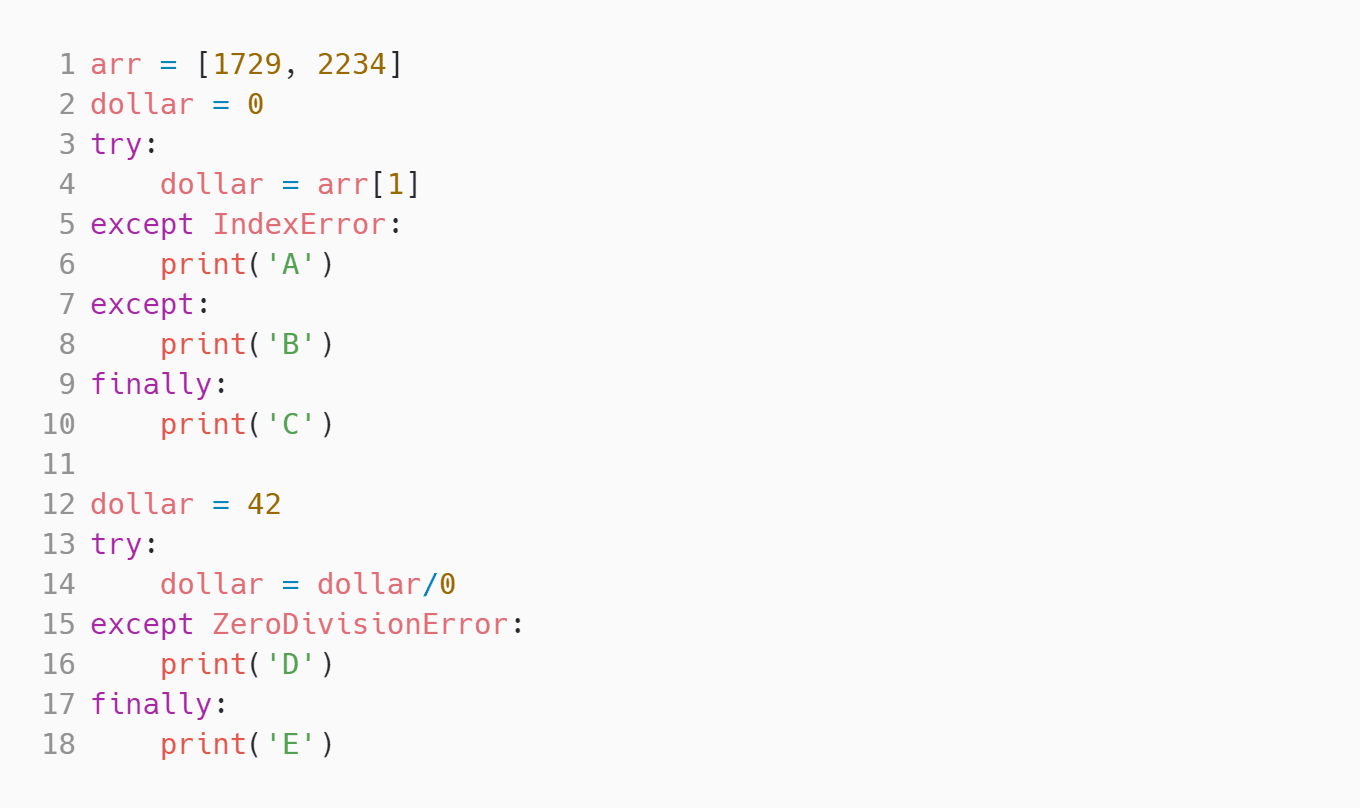
ZeroDivisionError and IndexError
Exceptions
Exception Handling
Error Handling
Solve
What will the following Python code output?
 image

Medium

Session
File Handling
Dictionary
Csv Parsing
Exception Handling In File Input/output
Solve
 image
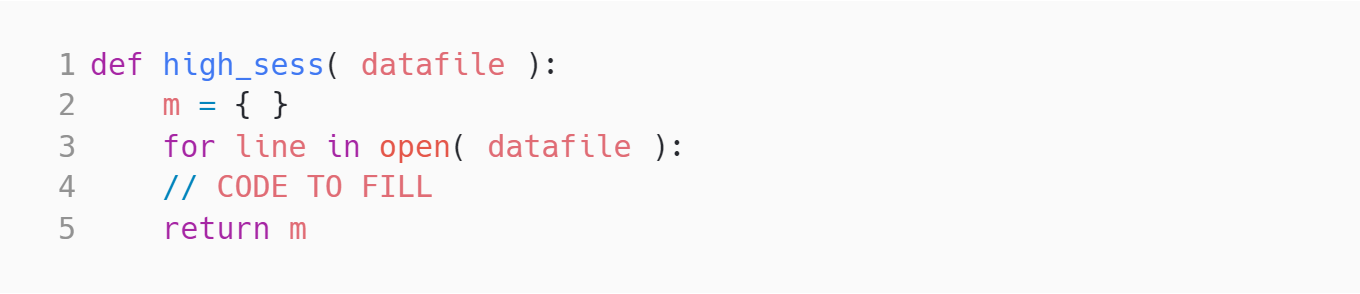
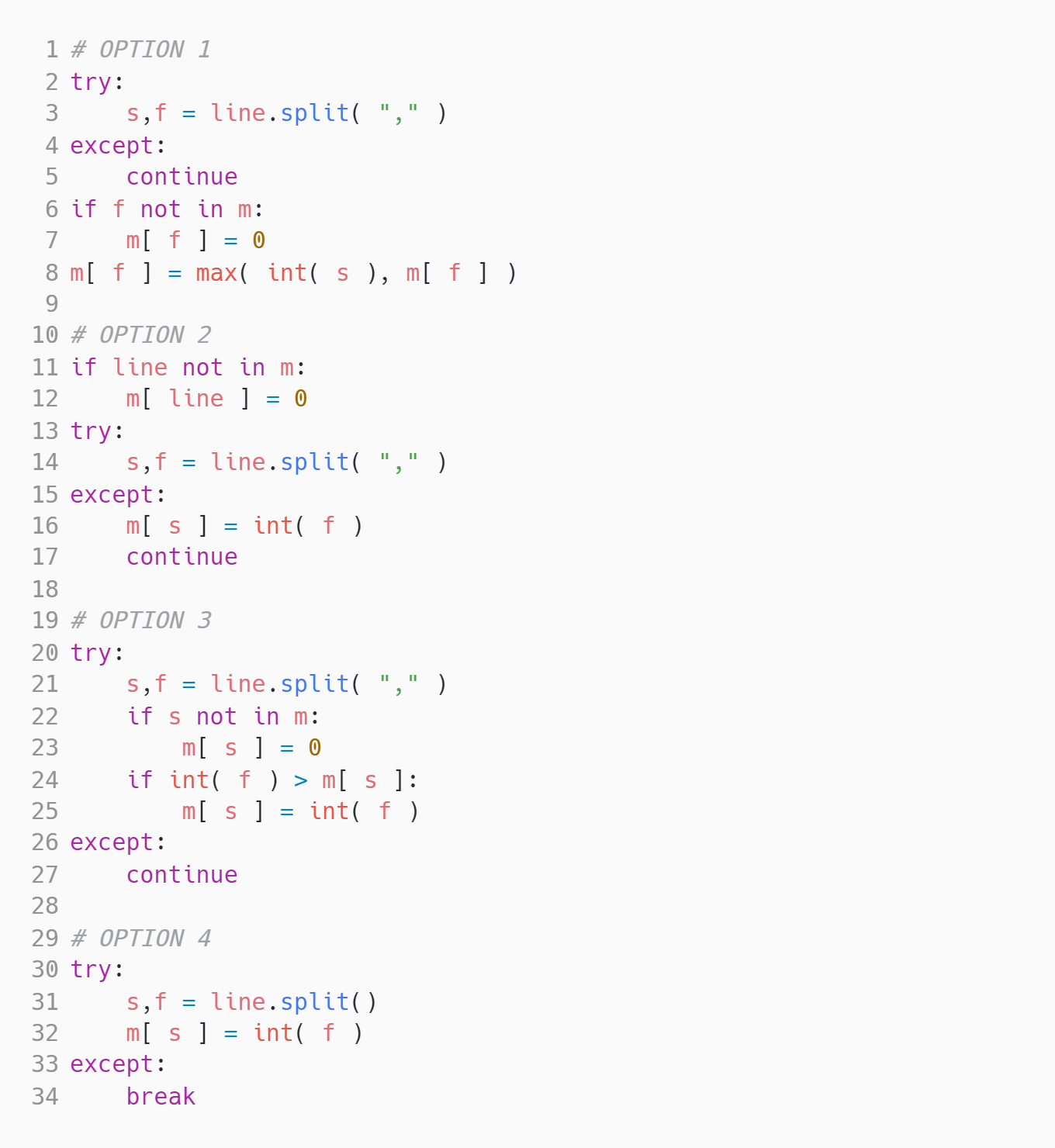
The function high_sess should compute the highest number of events per session of each user in the database by reading a comma-separated value input file of session data. The result should be returned from the function as a dictionary. The first column of each line in the input file is expected to contain the user’s name represented as a string. The second column is expected to contain an integer representing the events in a session. Here is an example input file:
Tony,10
Stark,12
Black,25
Your program should ignore a non-conforming line like this one.
Stark,3
Widow,6
Widow,14
The resulting return value for this file should be the following dictionary: { 'Stark':12, 'Black':25, 'Tony':10, 'Widow':14 }
What should replace the CODE TO FILL line to complete the function?
 image

Medium

Max Code
Arrays
Code Analysis
Algorithm Understanding
Solve
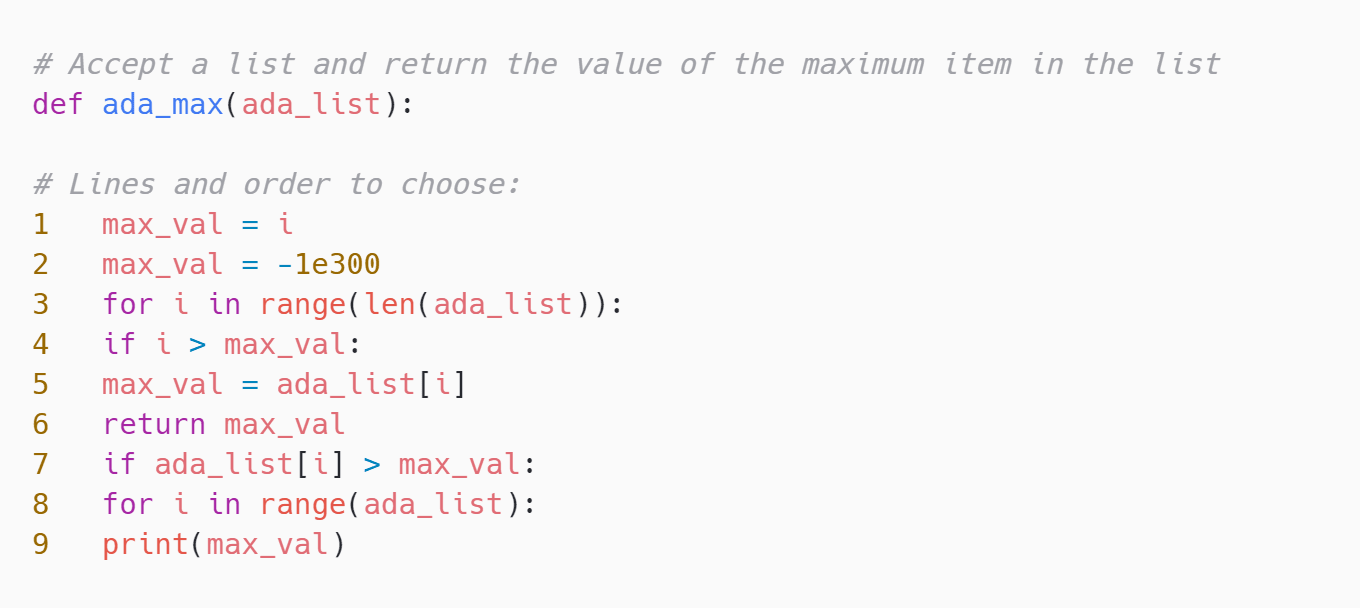
Below are code lines to create a Python function. Ignoring indentation, what lines should be used and in what order for the following function to be complete:
 image

Medium

Recursive Function
Recursion
Dictionary
Lists
Solve
Consider the following Python code:
 image
In the above code, recursive_search is a function that takes a dictionary (data) and a target key (target) as arguments. It searches for the target key within the dictionary, which could potentially have nested dictionaries and lists as values, and returns the value associated with the target key. If the target key is not found, it returns None.

nested_dict is a dictionary that contains multiple levels of nested dictionaries and lists. The recursive_search function is then called with nested_dict as the data and 'target_key' as the target.

What will the output be after executing the above code?

Medium

Stacking problem
Stack
Linkedlist
Solve
What does the below function ‘fun’ does?
 image
A: Sum of digits of the number passed to fun.
B: Number of digits of the number passed to fun.
C: 0 if the number passed to fun is divisible by 10. 1 otherwise.
D: Sum of all digits number passed to fun except for the last digit.
🧐 Question 🔧 Skill

Easy

JSON Prompt Design
JSON structure
Prompt crafting
Data types

2 mins

Prompt Engineering
Solve

Medium

Temperature Settings
Temperature calibration
Generative behavior
Output variability analysis

2 mins

Prompt Engineering
Solve

Medium

ZeroDivisionError and IndexError
Exceptions
Exception Handling
Error Handling

2 mins

Python
Solve

Medium

Session
File Handling
Dictionary
Csv Parsing
Exception Handling In File Input/output

2 mins

Python
Solve

Medium

Max Code
Arrays
Code Analysis
Algorithm Understanding

2 mins

Python
Solve

Medium

Recursive Function
Recursion
Dictionary
Lists

3 mins

Python
Solve

Medium

Stacking problem
Stack
Linkedlist

4 mins

Python
Solve
🧐 Question 🔧 Skill 💪 Difficulty ⌛ Time
JSON Prompt Design
JSON structure
Prompt crafting
Data types
Prompt Engineering
Easy 2 mins
Solve
Temperature Settings
Temperature calibration
Generative behavior
Output variability analysis
Prompt Engineering
Medium 2 mins
Solve
ZeroDivisionError and IndexError
Exceptions
Exception Handling
Error Handling
Python
Medium 2 mins
Solve
Session
File Handling
Dictionary
Csv Parsing
Exception Handling In File Input/output
Python
Medium 2 mins
Solve
Max Code
Arrays
Code Analysis
Algorithm Understanding
Python
Medium 2 mins
Solve
Recursive Function
Recursion
Dictionary
Lists
Python
Medium 3 mins
Solve
Stacking problem
Stack
Linkedlist
Python
Medium 4 mins
Solve
Get started for free
Preview questions
love bonito

With Adaface, we were able to optimise our initial screening process by upwards of 75%, freeing up precious time for both hiring managers and our talent acquisition team alike!

Brandon Lee, Head of People, Love, Bonito

Brandon
love bonito

It's very easy to share assessments with candidates and for candidates to use. We get good feedback from candidates about completing the tests. Adaface are very responsive and friendly to deal with.

Kirsty Wood, Human Resources, WillyWeather

Brandon
love bonito

We were able to close 106 positions in a record time of 45 days! Adaface enables us to conduct aptitude and psychometric assessments seamlessly. My hiring managers have never been happier with the quality of candidates shortlisted.

Amit Kataria, CHRO, Hanu

Brandon
love bonito

We evaluated several of their competitors and found Adaface to be the most compelling. Great library of questions that are designed to test for fit rather than memorization of algorithms.

Swayam Narain, CTO, Affable

Brandon

Why you should use Pre-employment Agent Engineer (LangChain) Test?

The Agent Engineer (LangChain) Test makes use of scenario-based questions to test for on-the-job skills as opposed to theoretical knowledge, ensuring that candidates who do well on this screening test have the relavant skills. The questions are designed to covered following on-the-job aspects:

  • Crafting effective prompts for AI models.
  • Understanding generative AI techniques.
  • Developing basic AI agents.
  • Writing Python scripts for AI.
  • Integrating LangChain in projects.
  • Deploying AI models efficiently.
  • Handling data manipulation in Python.
  • Constructing LangChain-based agents.
  • Debugging LangChain applications effectively.
  • Implementing NLP tasks with Python.

Once the test is sent to a candidate, the candidate receives a link in email to take the test. For each candidate, you will receive a detailed report with skills breakdown and benchmarks to shortlist the top candidates from your pool.

What topics are covered in the Agent Engineer (LangChain) Test?

Prompt Engineering: Prompt Engineering involves designing and refining the inputs fed to AI models to achieve desired outputs. It is an essential skill for optimizing AI interactions and extracting meaningful results, especially in natural language processing tasks.

Generative AI: Generative AI is the process of using algorithms to create new content, such as text, images, or music. It plays a pivotal role in developing innovative solutions and expanding the capabilities of AI systems, making it critical for creative problem solving.

Agent Development: Agent Development focuses on creating autonomous programs that can perceive their environment and take actions to achieve specific goals. This skill is crucial for building intelligent systems that can automate complex tasks.

Python Programming: Python Programming involves using the Python language to build and deploy software applications. Given its prominence in AI and data science, proficiency in Python is essential for effective implementation of AI solutions.

LangChain Framework: The LangChain Framework is used to build modular and scalable conversational AI applications. Understanding this framework allows developers to create sophisticated language models and agent systems efficiently.

Natural Language Processing: Natural Language Processing (NLP) is the technology that enables machines to understand and interpret human language. This skill is vital for developing applications that require interaction with users in natural language.

AI Model Deployment: AI Model Deployment refers to the process of integrating trained AI models into production environments. Ensuring models are efficiently deployed is essential for maintaining performance and scalability in real-world applications.

Data Handling in Python: Data Handling in Python encompasses the techniques and tools used to manage, process, and analyze data in Python. Mastery of this skill ensures efficient data manipulation, which is fundamental to AI model development.

LangChain Agent Construction: LangChain Agent Construction involves building agents specifically using the LangChain Framework. This enables the creation of robust AI systems that leverage the framework's capabilities for language processing.

Debugging LangChain Applications: Debugging LangChain Applications involves identifying and resolving issues within applications built on the LangChain Framework. Effective debugging practices are crucial for maintaining the functionality and reliability of AI-driven solutions.

Full list of covered topics

The actual topics of the questions in the final test will depend on your job description and requirements. However, here's a list of topics you can expect the questions for Agent Engineer (LangChain) Test to be based on.

Prompt Tuning
AI Outputs
Agent Architecture
Python Syntax
LangChain Basics
NLP Techniques
Model Deployment
Data Wrangling
Error Handling
Agent Interactions
LangChain Variables
Generative Models
Loop Constructs
Conditional Logic
Python Libraries
Data Types
Concurrency
Agent Protocols
LangChain Updates
Text Processing
Model Integration
Task Automation
Script Optimization
APIs
LangChain Modules
Data Parsing
Dynamic Programming
LangChain Utilities
Prompt Patterns
Python Debugging
AI Paradigms
LangChain Agents
Machine Learning
Language Models
Agent Testing
Data Analysis
LangChain Configuration
Object-Oriented
Json Handling
Data Serialization
Prompt Strategies
LangChain Debugging
Data Structures
AI Ethics
Parallel Execution
Version Control
Agent Evaluation
LangChain Versioning
Code Refactoring
AI Pipeline
Agent Logic

What roles can I use the Agent Engineer (LangChain) Test for?

  • AI Engineer
  • Data Scientist
  • Machine Learning Engineer
  • Software Developer
  • Python Developer
  • AI Architect
  • Technology Consultant
  • Research Scientist
  • Automation Engineer
  • LangChain Specialist

How is the Agent Engineer (LangChain) Test customized for senior candidates?

For intermediate/ experienced candidates, we customize the assessment questions to include advanced topics and increase the difficulty level of the questions. This might include adding questions on topics like

  • Designing complex machine learning workflows.
  • Optimizing AI models for performance.
  • Advanced agent development and execution.
  • Building scalable AI applications.
  • Managing stateful interactions in LangChain.
  • Implementing robust data handling strategies.
  • Python programming for AI deployment.
  • Utilizing generative AI for problem-solving.
  • Architecting AI systems using LangChain.
  • Advanced prompt engineering for customization.

The coding question for experienced candidates will be of a higher difficulty level to evaluate more hands-on experience.

Try the most advanced candidate assessment platform

AI Cheating Detection with Honestly

ChatGPT Protection

Non-googleable Questions

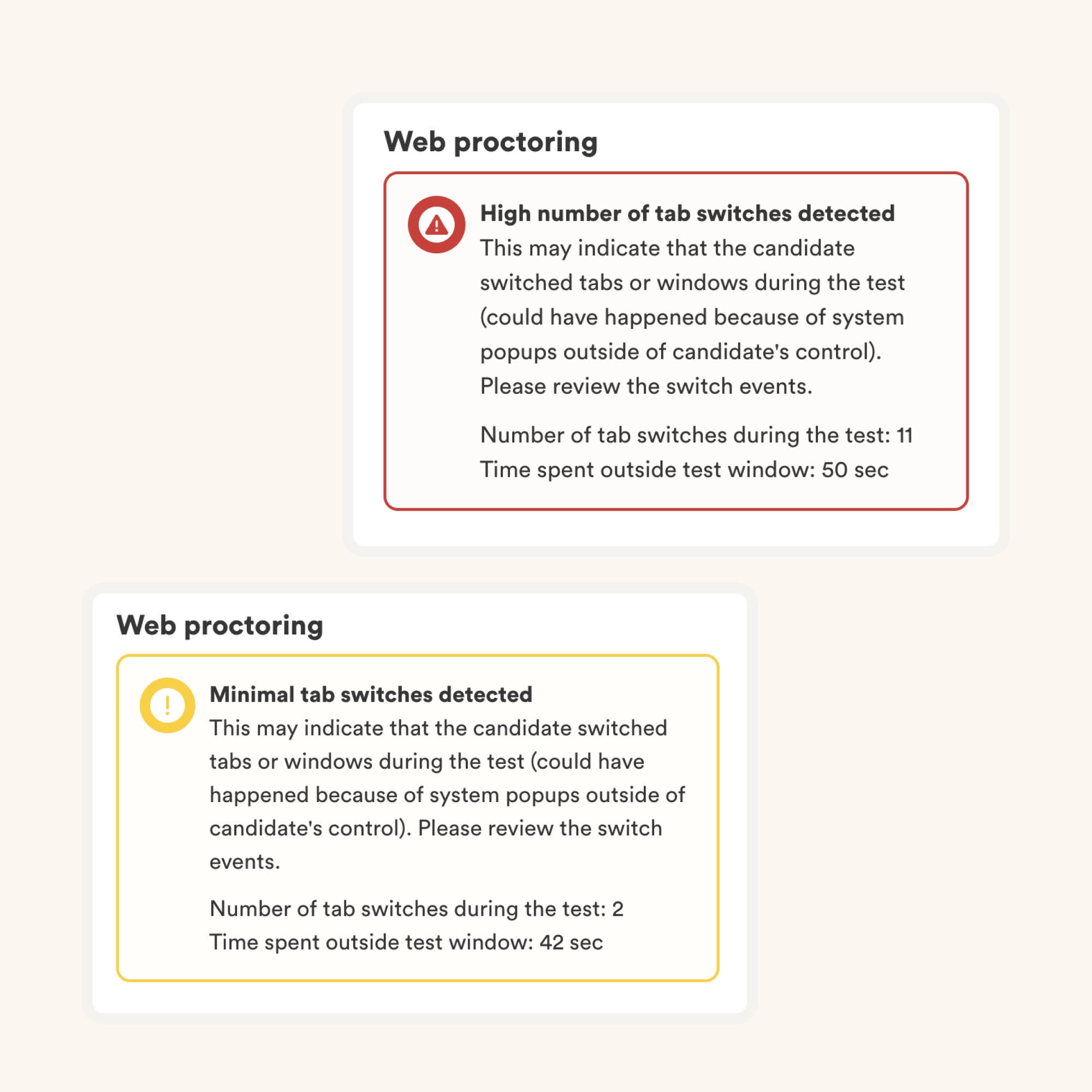
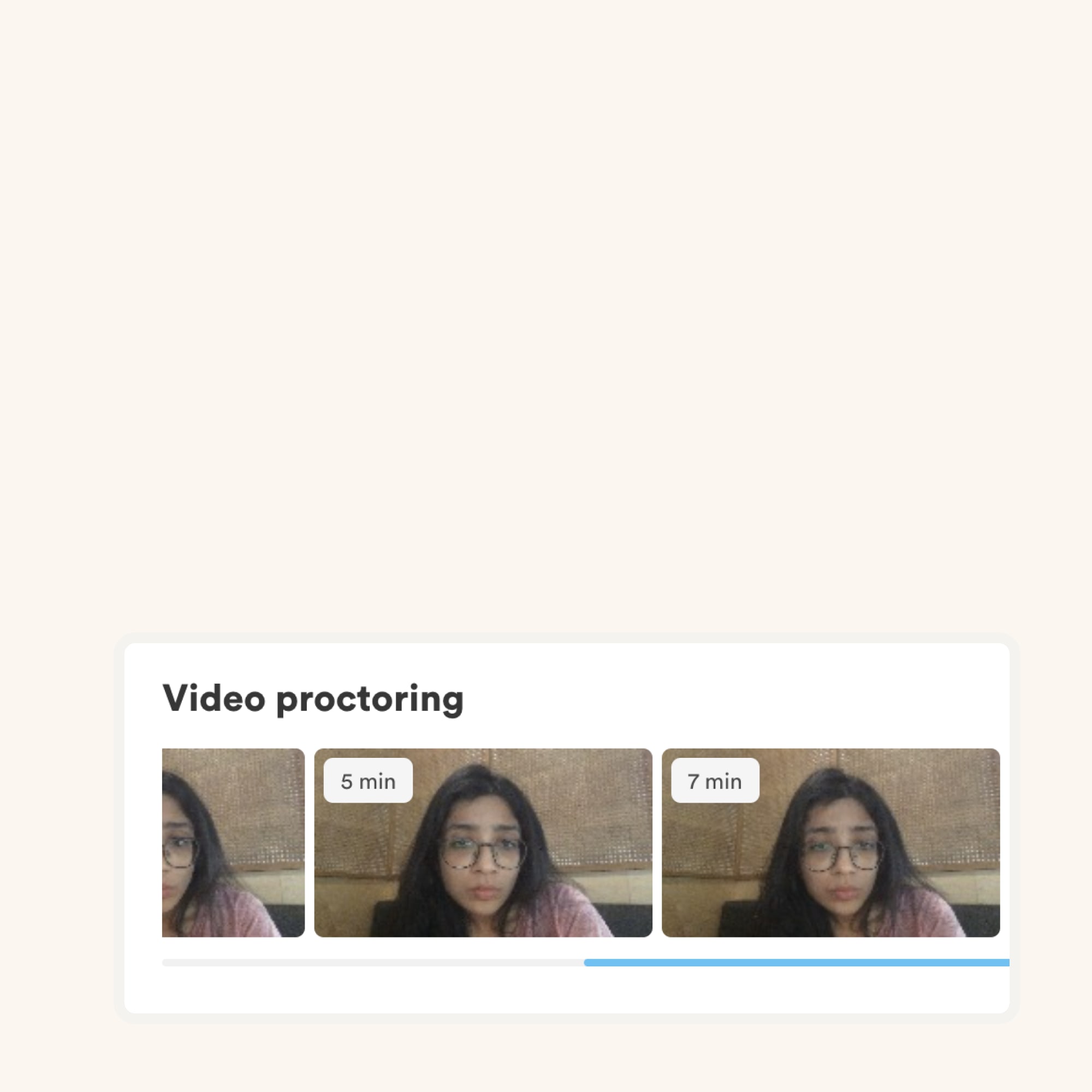
Web Proctoring

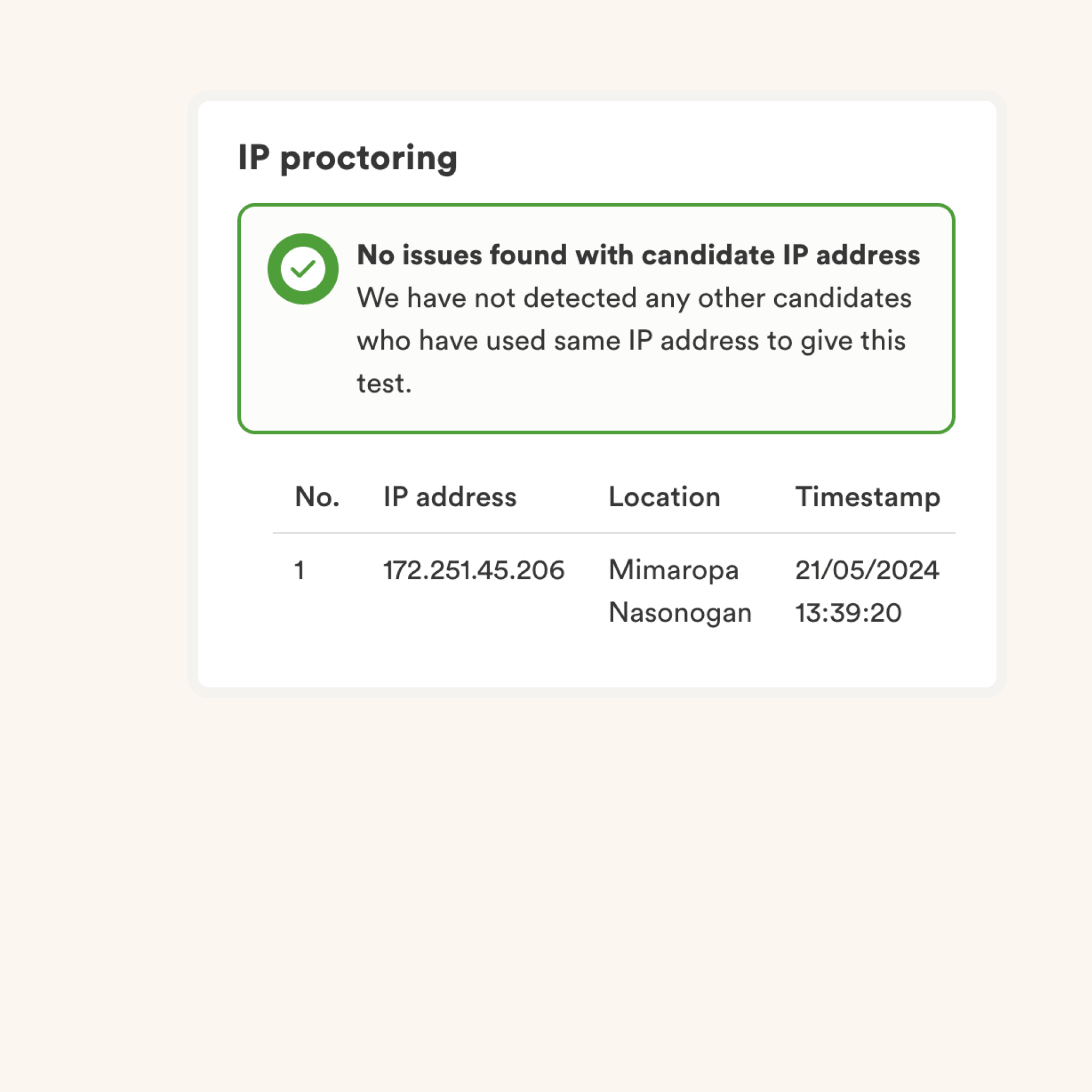
IP Proctoring

Webcam Proctoring

MCQ Questions

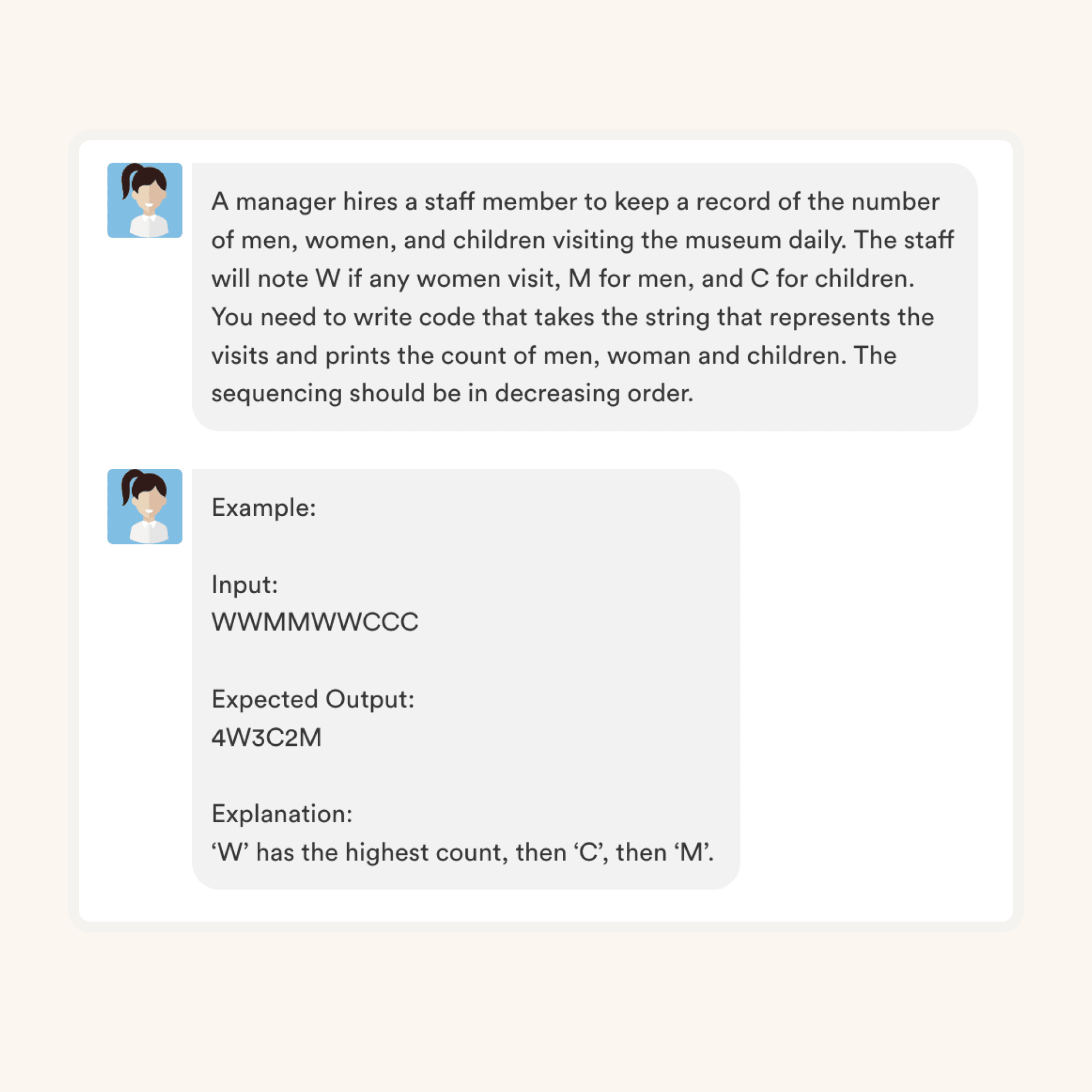
Coding Questions

Typing Questions

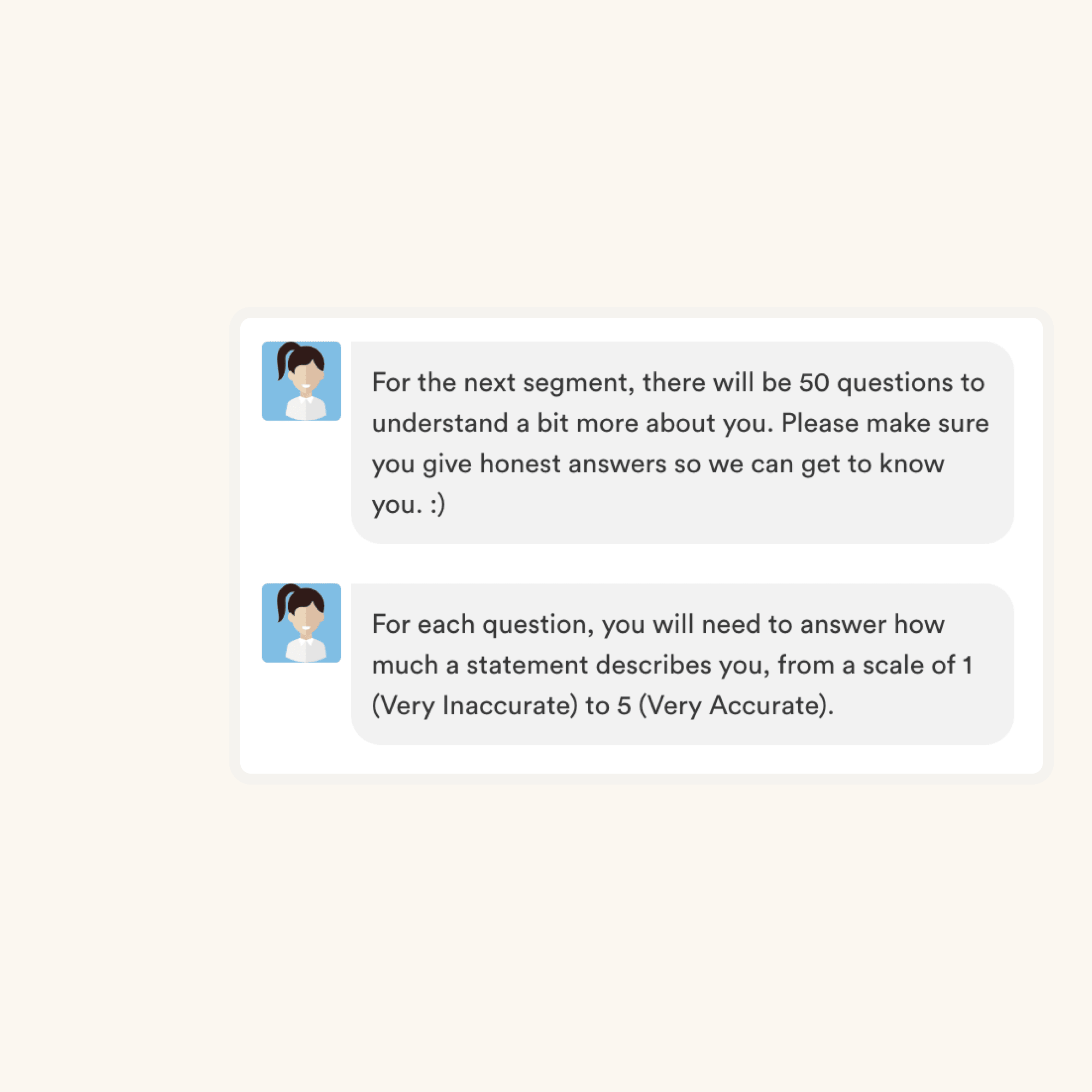
Personality Questions

Custom Questions

Ready-to-use Tests

Custom Tests

Custom Branding

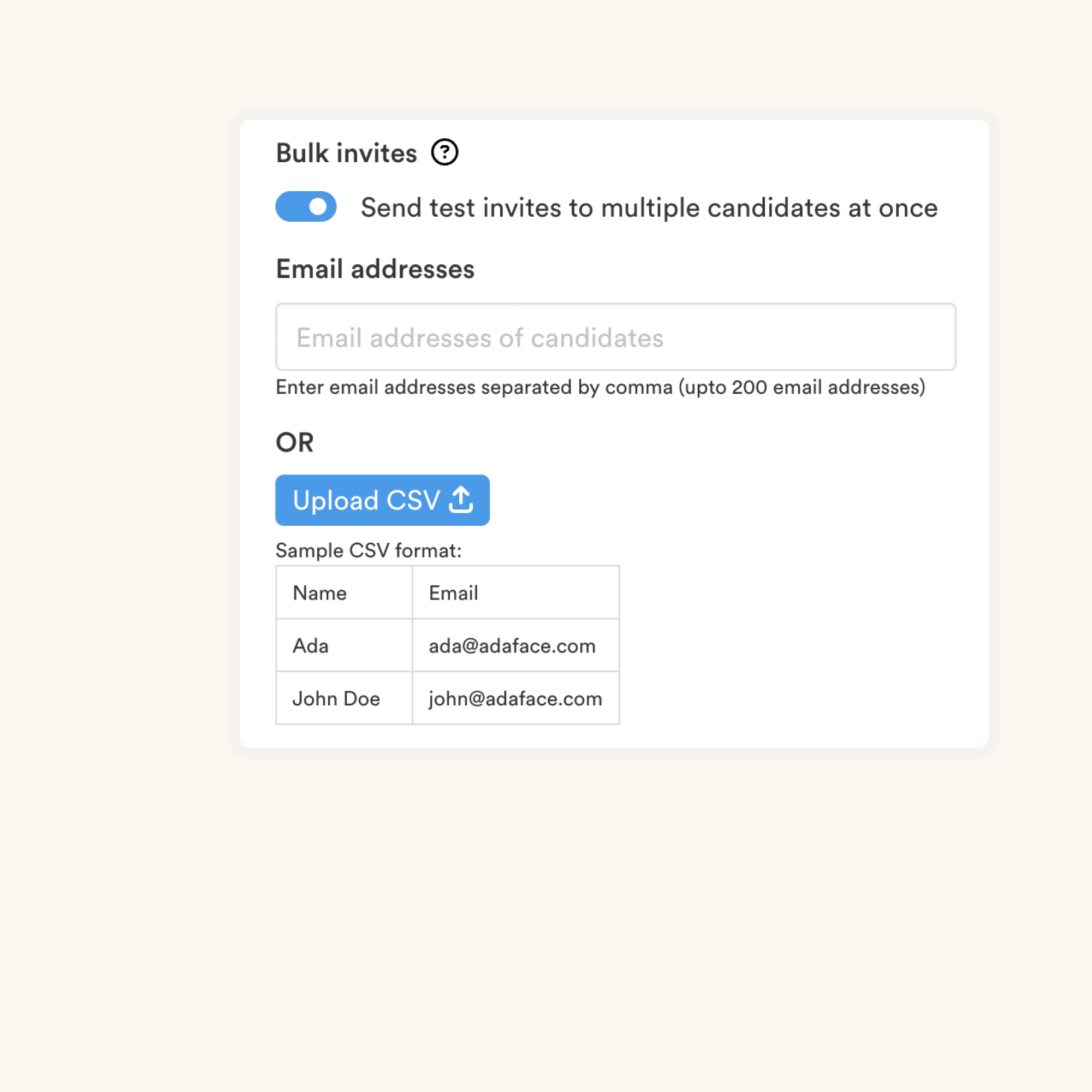
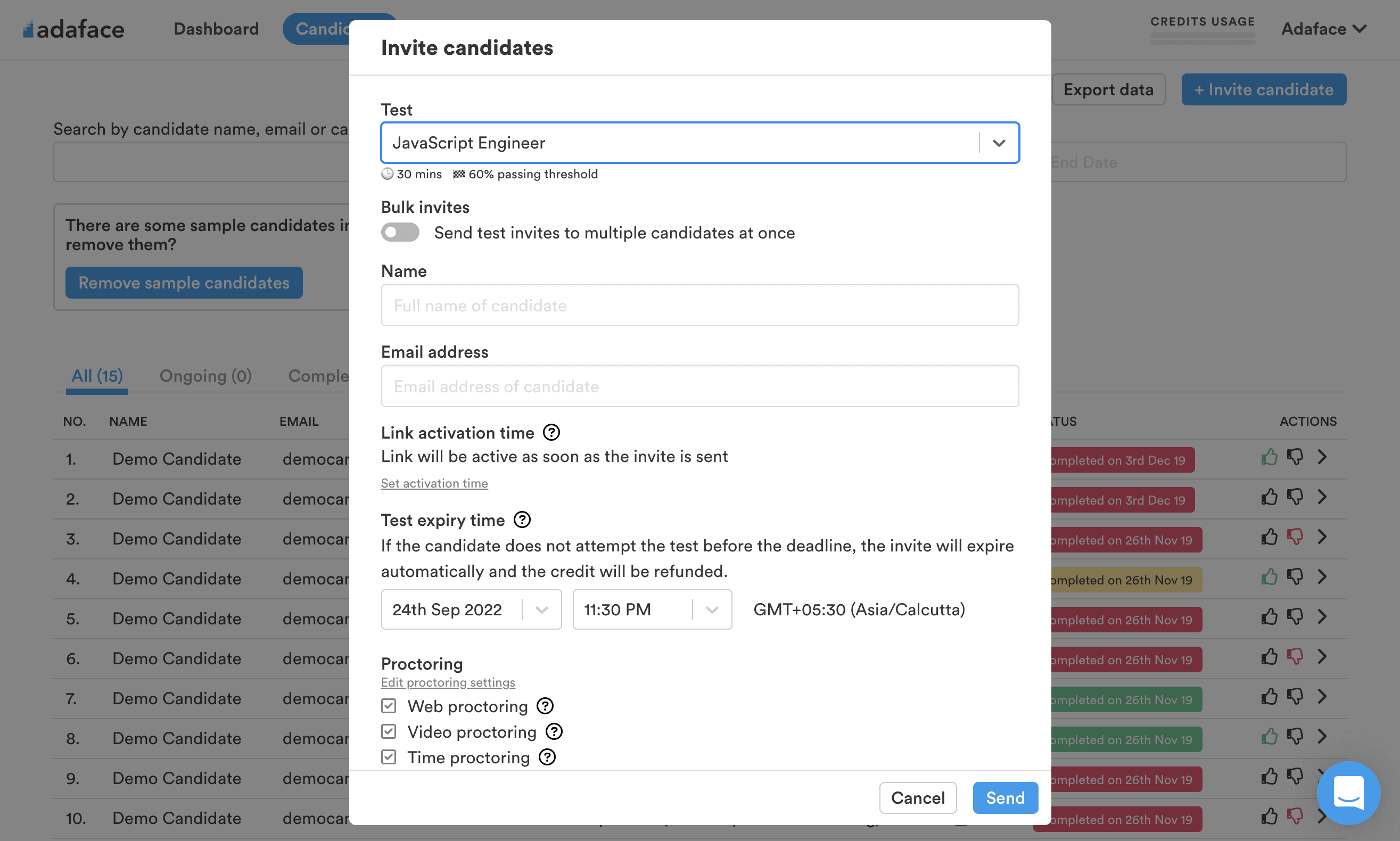
Bulk Invites

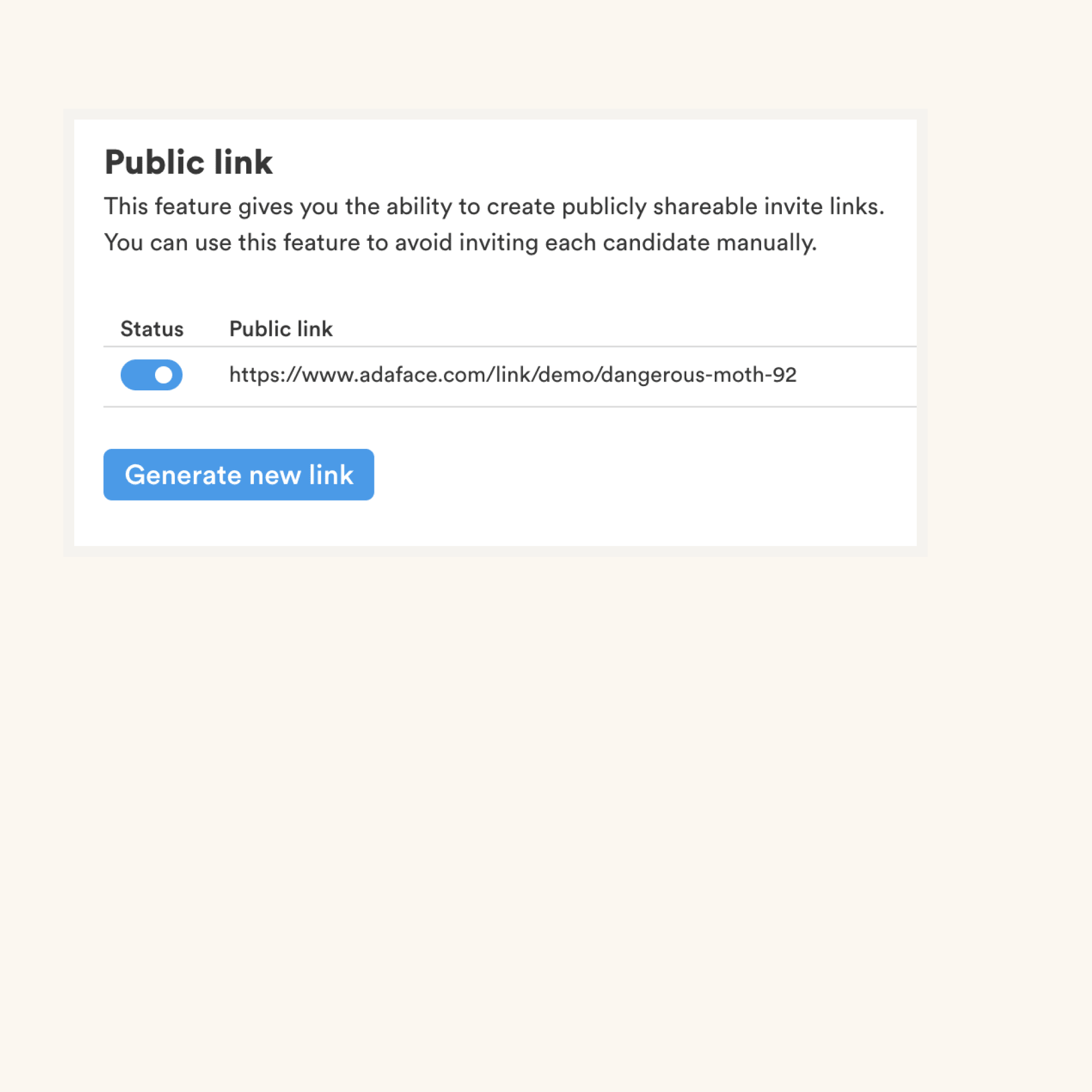
Public Links

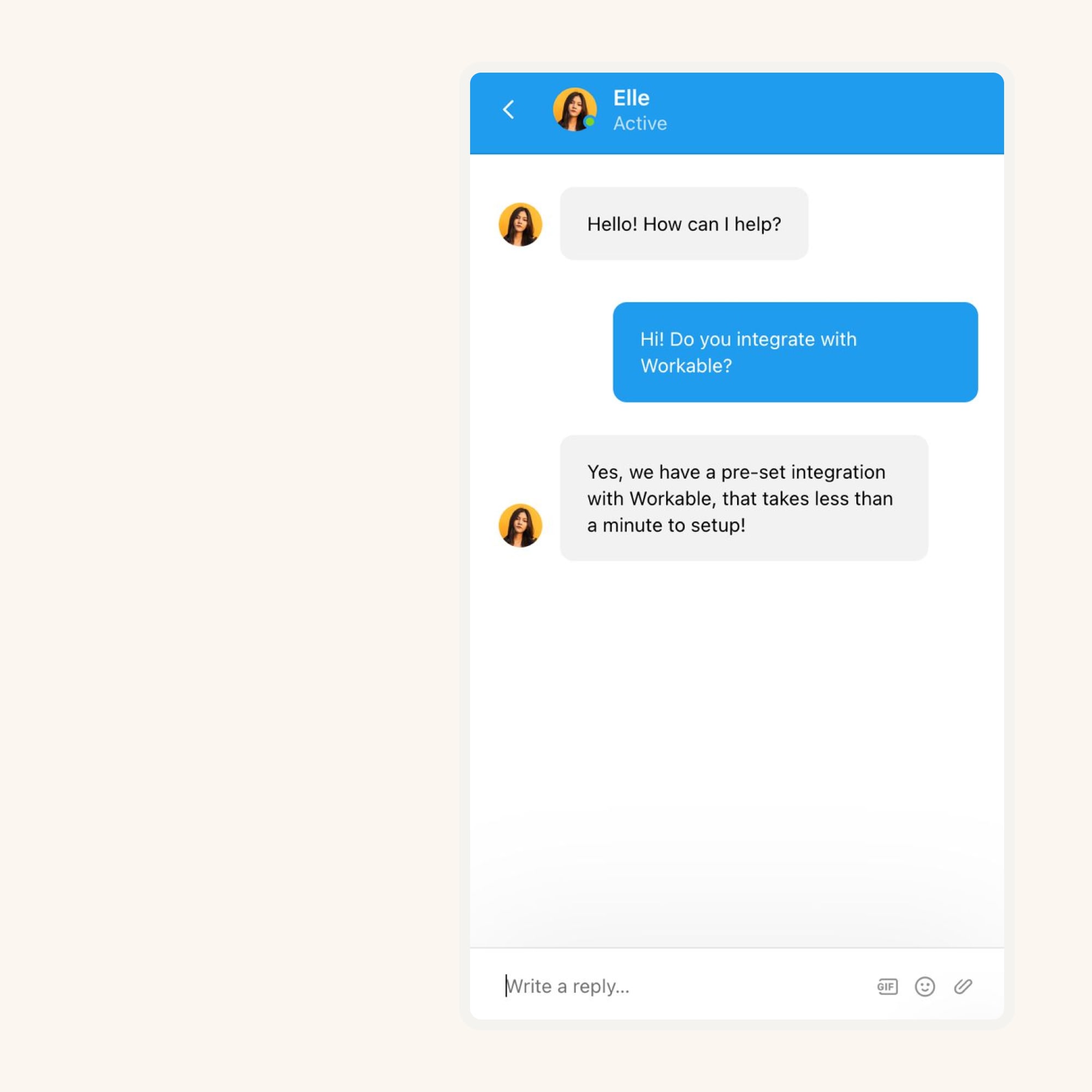
ATS Integrations

Multiple Question Sets

Custom API integrations

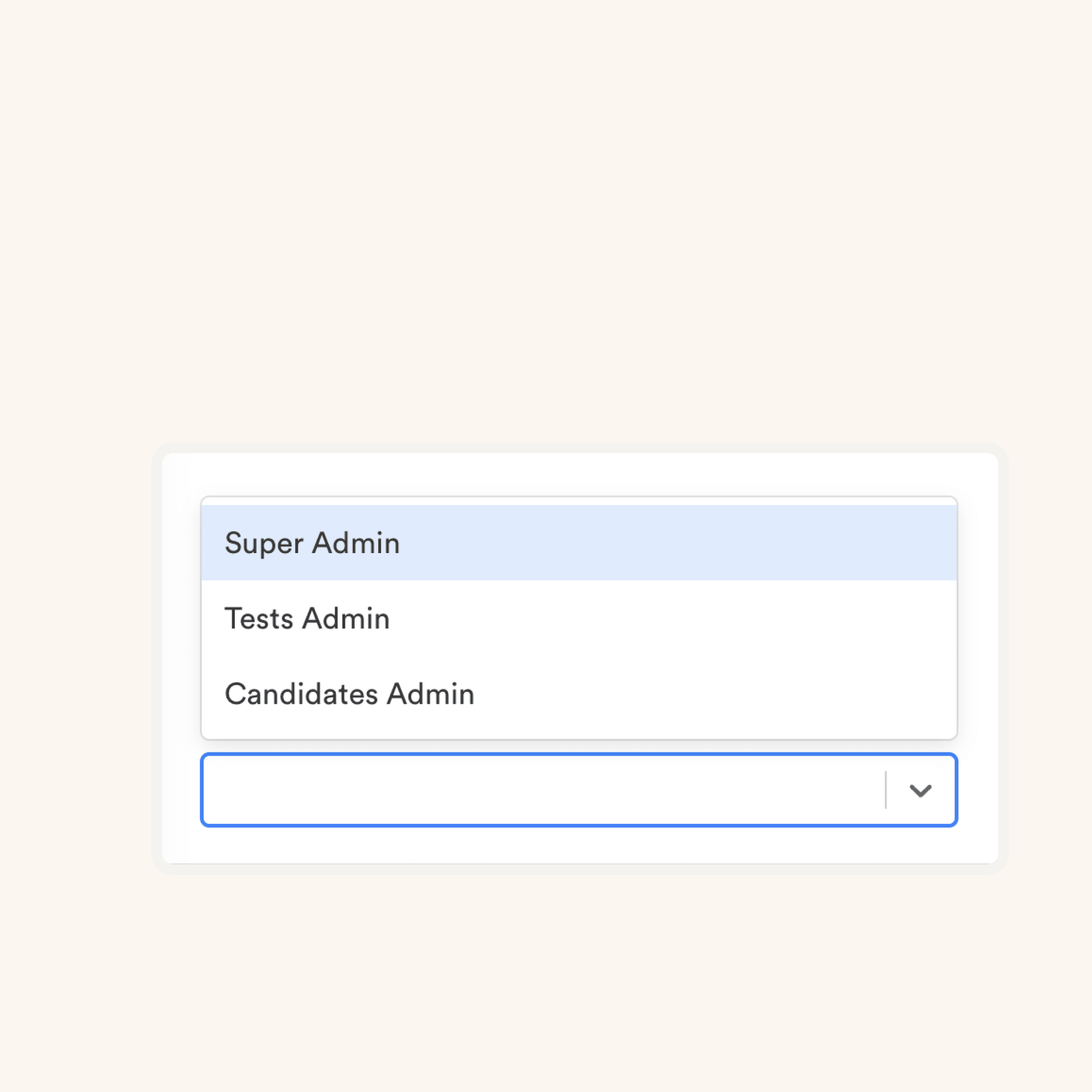
Role-based Access

Priority Support

GDPR Compliance

Screen candidates in 3 easy steps

Pick a test from over 500+ tests

The Adaface test library features 500+ tests to enable you to test candidates on all popular skills- everything from programming languages, software frameworks, devops, logical reasoning, abstract reasoning, critical thinking, fluid intelligence, content marketing, talent acquisition, customer service, accounting, product management, sales and more.

Invite your candidates with 2-clicks

Make informed hiring decisions

Get started for free
Preview questions

Have questions about the Agent Engineer (LangChain) Hiring Test?

What is the Agent Engineer (LangChain) Test?

The Agent Engineer (LangChain) Test evaluates candidates' skills in Prompt Engineering, Generative AI, Agent Development, Python Programming, LangChain Framework, and more. It's used by recruiters to identify qualified candidates for AI and machine learning roles.

Can I combine the Agent Engineer Test with Generative AI questions?

Yes, recruiters can request a custom test that combines the Agent Engineer Test with Generative AI questions. You can explore our Working with Generative AI Test for more details on assessing the Generative AI skill.

What topics are evaluated in the Agent Engineer Test?

This test covers a range of topics including Prompt Engineering, Generative AI, Agent Development, Python Programming, LangChain Framework, Natural Language Processing, AI Model Deployment, and Debugging LangChain Applications.

How to use the Agent Engineer (LangChain) Test in my hiring process?

Use this test as a pre-screening tool by adding a link to it in your job post or inviting candidates directly via email.

Can I test Python and LangChain together?

Yes, you can combine Python and LangChain skills in a single test. This combination is recommended to thoroughly assess candidates' capabilities in machine learning workflows using LangChain. Check the Python & LangChain Test for more information.

Can I combine multiple skills into one custom assessment?

Yes, absolutely. Custom assessments are set up based on your job description, and will include questions on all must-have skills you specify. Here's a quick guide on how you can request a custom test.

Do you have any anti-cheating or proctoring features in place?

We have the following anti-cheating features in place:

  • Hidden AI Tools Detection with Honestly
  • Non-googleable questions
  • IP proctoring
  • Screen proctoring
  • Web proctoring
  • Webcam proctoring
  • Plagiarism detection
  • Secure browser
  • Copy paste protection

Read more about the proctoring features.

How do I interpret test scores?

The primary thing to keep in mind is that an assessment is an elimination tool, not a selection tool. A skills assessment is optimized to help you eliminate candidates who are not technically qualified for the role, it is not optimized to help you find the best candidate for the role. So the ideal way to use an assessment is to decide a threshold score (typically 55%, we help you benchmark) and invite all candidates who score above the threshold for the next rounds of interview.

What experience level can I use this test for?

Each Adaface assessment is customized to your job description/ ideal candidate persona (our subject matter experts will pick the right questions for your assessment from our library of 10000+ questions). This assessment can be customized for any experience level.

Does every candidate get the same questions?

Yes, it makes it much easier for you to compare candidates. Options for MCQ questions and the order of questions are randomized. We have anti-cheating/ proctoring features in place. In our enterprise plan, we also have the option to create multiple versions of the same assessment with questions of similar difficulty levels.

I'm a candidate. Can I try a practice test?

No. Unfortunately, we do not support practice tests at the moment. However, you can use our sample questions for practice.

What is the cost of using this test?

You can check out our pricing plans.

Can I get a free trial?

Yes, you can sign up for free and preview this test.

I just moved to a paid plan. How can I request a custom assessment?

Here is a quick guide on how to request a custom assessment on Adaface.

View sample scorecard


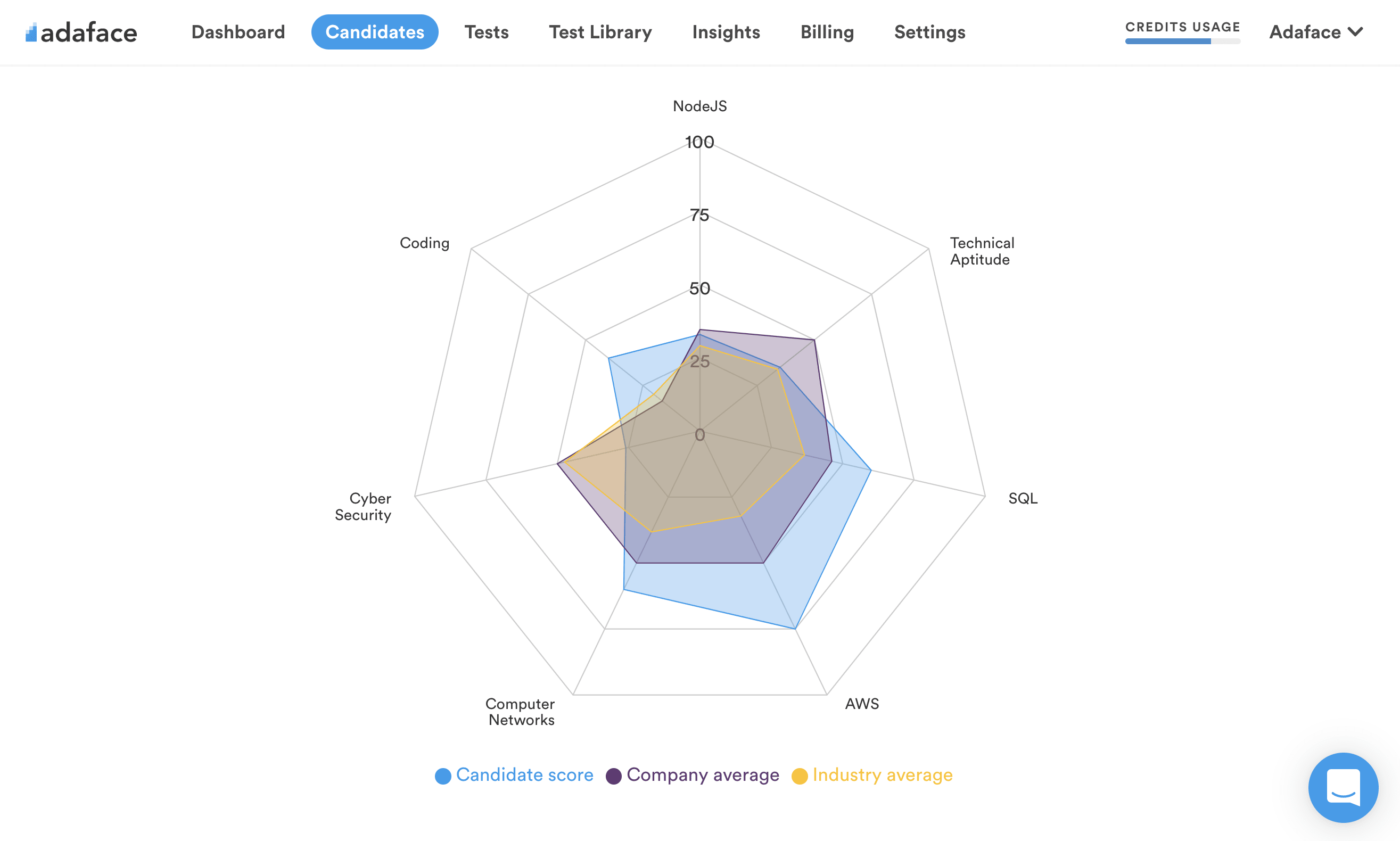
Along with scorecards that report the performance of the candidate in detail, you also receive a comparative analysis against the company average and industry standards.
View sample scorecard
customers across world
Join 1200+ companies in 80+ countries.
Try the most candidate friendly skills assessment tool today.
g2 badges
Ready to use the Adaface Agent Engineer (LangChain) Test?
logo
40 min tests.
No trick questions.
Accurate shortlisting.
Terms Privacy Trust Guide
ada
Ada
● Online
Previous
Score: NA
Next
✖️